 Japan
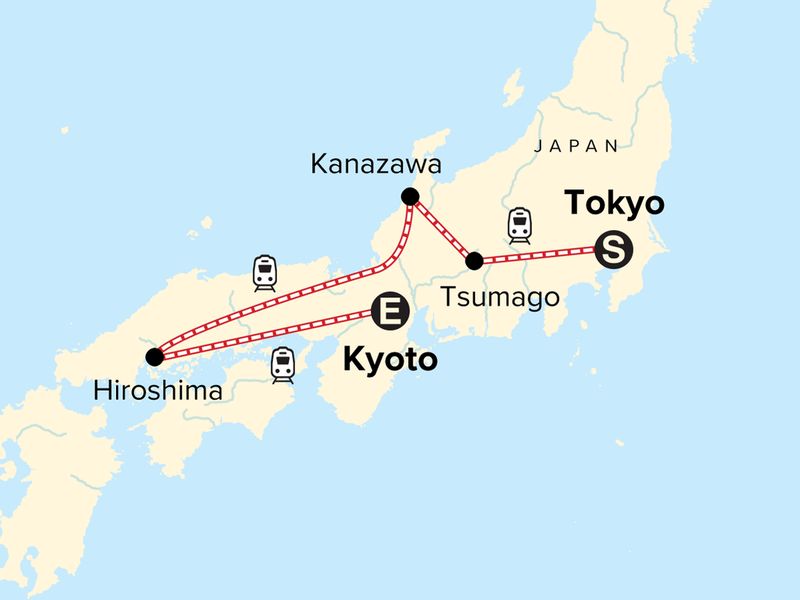
JapanJourneys: Iconic Japan
Arrive to your start hotel around 4:00 pm and join your welcome meeting at 6:00 pm. There are no activities planned today until your evening welcome meeting. Please ensure you arrive on time for the welcome meeting and bring your passport so your National Geographic Expedition Leader can collect the required information for your train tickets. Refer to your voucher for the most up to date welcome meeting time.

Your Welcome Moment: Welcome Moment - Meet Your Expedition Leader and Group
Your opportunity to meet your National Geographic Expedition Leader and fellow travellers, and learn more about your tour. Opt to join the group for a local meal afterwards. Don't forget to see the notice in the lobby (or ask reception) for the official time and place to meet up with the group.
Accommodation
Below is an example of the hotel we may use in this city. For the actual hotel your specific departure will be using, please check your voucher.

Shizutetsu Hotel Prezio Tokyo Tamachi
Spend the day exploring vibrant Tokyo—one of the world’s most populous cities—by public transit. Experience the traditional side of the Japanese capital on a visit to the Meiji Shrine, dedicated to Emperor Meiji and his wife. We then get a glimpse of the city’s quirky, modern side on a walk through Harajuku, a centre of Japanese pop culture and a great place to sit back and people watch. In Harajuka we catch a glimpse of the pop culture phenomenon of Kawaii. Directly translated as "cute," this Japanese cultural movement is reflected through various avenues of entertainment, toys, personal style, attitude, and cuisine.

Metro
Get around underground via public transit.

Orientation Walk
Join your group for a guided orientation walk as you explore eclectic and modern Tokyo.

Harajuku Visit
The Harajuku district is known as the centre of Japanese youth culture and fashion. Here, find dozens of shopping and dining options including independent boutiques and larger international luxury stores.
Meiji Shrine (Meiji Jingū) Visit
Visit this shrine dedicated to the 123rd emperor of Japan, Emperor Meiji and his wife. The shrine is a great place to escape the bustle of the city and wander the grounds along the wide walking paths.
Accommodation
Shizutetsu Hotel Prezio Tokyo Tamachi
This morning, set out to visit the Tsukiji fish and seafood outer market. Learn about Japan’s massive fishing industry, and round off the experience with a sushi-making class. Learn how to identify the freshest fish, prepare, fillet, and present; then enjoy a taste of your tasty creations. After your sushi lunch, take a stroll in Asakusa, the historic heart of Tokyo. Opt to visit Ueno park and the museums, Akihabara for cutting edge electronics, Harajuku for funky fashions, Ginza for the highest of the high end, walk the grounds of the Imperial Palace East Garden, or just stroll the streets, looking for the traditional life that still lies just under the modern surface.
Metro
Get around underground via public transit.
Tsukiji Fish Market
Visit the Tsukiji Fish Market, formerly known as the biggest fish and seafood market in the world, to get an idea of how important this industry is in Tokyo.

Your Journeys Highlight Moment: Tsukiji Sushi Experience
Walk through the Tsukiji outer Market. Later, take in a class with recognized sushi masters. learning first how to recognize the freshest ingredients, before learning to prepare, fillet, and perform the delicate art of sushi-making and presentation. Then, try your own hand at making sushi and enjoy a taste of your own creation.
Asakusa Walk
Discover this historic entertainment district on a guided orientation tour of the area. Take in one of Tokyo's iconic sites with a stop at Sensoji temple.
Optional Activities - Day 3Show
Accommodation
Shizutetsu Hotel Prezio Tokyo Tamachi
Depart Tokyo by train. Disembark at Nagiso and continue to a local minshuku, a traditional Japanese bed-and-breakfast, where we’ll spend the night. Enjoy a walk through the countryside, passing lush farms and rice paddies into Tsumago, a protected cultural area dating to the Edo period. Explore the charming town, where motorized vehicles are prohibited on the main street during the day and phone lines and power cables hidden from view to preserve its traditional feel. Back at our minshuku, feast on a kaiseki meal—a ritualistic multi-course dinner emphasizing artful presentation and fresh ingredients.
Metro
Get around underground via public transit.

Train
Climb aboard, take a seat, and enjoy the ride.

Tsumago Countryside and Village walk
Take a walk through the countryside, passing farms, hamlets, and rice patties, continuing into Tsumago, a traditional village. Considered one of the best preserved post towns in Japan, the residents go to great lengths to recreate the feel of the Edo Period. Motorized vehicles are prohibited from the main street during the day and phone lines and power cables are hidden to allow visitors to feel as if they have stepped back in time.
Accommodation
Hanaya Tsumago Ryokan
Continue by train to the historic city of Kanazawa, the seat of the powerful Maeda clan during the Edo period. Venture to Nagamachi, the city’s well-preserved samurai district located at the foot of Kanazawa Castle, and learn about the lifestyle of Japan’s ancient, elite warrior class. We’ll also visit the Nomura residence, the beautifully restored home of a wealthy samurai family, boasting a collection of antique heirlooms and a stunning garden.
Train
Climb aboard, take a seat, and enjoy the ride.

Taxi
Jump in the back and tell the driver to step on it, just like they do in the movies.
Local Bus
Climb aboard, grab a seat, and enjoy the ride.
Nagamachi Samurai District Walk
Step back in time with a visit to the Nagamachi Samurai district of Kanazawa. Take a walk through the historic samurai district located just below the Kanazawa Castle, where traditionally samurai and their families lived in mud huts.
Visit Nomura Family Samurai Residence
Visit the Nomura Family Samurai Residence - who held executive posts from one generation to the next under rule of the Maeda family. A stunning landmark has a coffered ceiling constructed of Japanese cypress and stunning fusuma-e (paintings on sliding-door panels) which were created by the personal painter of the Maeda family. Also enjoy the garden which features a 400-year old Japanese bayberry and winding stream surrounded by ancient rocks.
Accommodation
ANA Crowne Plaza Kanazawa
Spend the day exploring Kanazawa. Visit the Myoryuji Temple—commonly known as the Ninja Temple—which doubled as a military outpost, and discover its many hidden defenses and escape routes. Take a walk through the Higashi Chaya geisha district and gain insights into geisha culture, viewing one of the district’s traditional wooden houses. Then visit a local craft studio, where we’ll learn about the city’s time-honoured crafts and learn to paint chopsticks with gold leaf.
Myoryuji Ninja Temple Visit
Visit the famous Ninja Temple. While there's no evidence linking the temple to ninjas, the hidden doorways, passages and escape routes seem designed for stealthy attackers. Please leave all nunchucks with security.
Your Hands-On Moment: Chopstick and Gold Leaf Painting Experience
Partake in a hands-on experience in one of Kanazawa's many famous craft studios and enjoy chop stick and gold leaf painting.

Free Time
Enjoy some free time to explore on your own.
Higashi Geisha District Visit
Step back in time with a visit to the Higashi Chaya geisha district of Kanazawa. Learn about the geisha culture, prevalent in Kanazawa since the 17th century. Visit the traditional two-story wooden houses decorated with lattice and discover the traditions behind this iconic Japanese way of life.
Local Bus
Climb aboard, grab a seat, and enjoy the ride.
Optional Activities - Day 6Show
Accommodation
ANA Crowne Plaza Kanazawa
Travel by bullet train to Hiroshima. Here, we’ll pay a visit to the Peace Memorial Park and Museum, located in the heart of the city, which commemorates the tragic atomic bombings of 1945. Take your time to wander through the park, pausing at memorials dedicated to the victims of the attack, and visit the moving statue of Sadako Sasaki at the Children’s Peace Monument, a reminder of the thousands of young lives lost as a result of the bombings. The large Peace Park in the centre of the city is an extremely moving place dotted with memorials of those known to have been killed in the explosion and others who died as a result. A burning flame waits in the park to be extinguished when all nuclear weapons in the world have been destroyed.
Taxi
Jump in the back and tell the driver to step on it, just like they do in the movies.
Train
Climb aboard, take a seat, and enjoy the ride.
Tram
Move through the busy streets with ease via urban light rail.

Hiroshima Park and Peace Memorial
Walk through the Peace Park in the centre of Hiroshima, a living memorial dedicated to the tens of thousands who died from the atomic bomb blast in 1945. Visit the statue of Sadako Sasaki, a young girl who died of leukemia as a result of the bomb blast, despite folding 1,000 origami paper cranes to appeal to the gods to make her well. See the frame of the Gembaku Dome, the sole building to withstand the explosion. Reflect, remember, and be reminded of the power we all hold to create peace.
Accommodation
ANA Crowne Plaza Hiroshima
Catch a ferry to Itsukushima Island, popularly known as Miyajima. Here, you’ll find one of Japan’s most beautiful and sacred temples, the 12th-century Itsukushima Shinto shrine. This UNESCO World Heritage site is built over the water, with a red torii or wooden gateway that appears to float at high tide. Spend the afternoon at leisure and explore on your own.

Ferry
Get to the next spot on your route aboard a convenient and efficient ferry boat.

Miyajima Island Visit
Take a trip to Miyajima Island, famed as one of Japan's most scenic spots, with a free afternoon to explore. See the famous floating Torii Gate, set out in the bay, which glows extraordinarily at sunset. The island is dotted with shrines and temples, populated by deer, and traversed with hiking trails for those who want to get some exercise. There are also lanes full of souvenirs and tasty treats. Visit Miyajima at your own pace, and have the option to hike up to the peak of the island, Mt Misen, to see spectacular views of the surrounding islands.
Free Time
Enjoy some time to explore on your own.
Accommodation
ANA Crowne Plaza Hiroshima
This morning, visit the World Heritage-listed Himeji Castle, widely considered Japan’s most spectacular and best-preserved castle. The castle was completed in the early 17th century and features an elegant white facade with multiple wooden roofs. Later, we hop on a train to Kyoto, which served as Japan’s imperial capital for more than a thousand years. Explore the city’s stunning temples, shrines, and gardens at leisure. This afternoon, take a guided stroll through the lantern-lined streets of Gion, Kyoto’s renowned geisha district. As the Imperial capital, Kyoto is an essential part of any visit to Japan. Kyoto has some of the most magnificent temples in Japan which date back centuries. There are said to be 2,000 temples, shrines, palaces, museums and traditional gardens in Kyoto. Use your time to wander past huge wooden structures and multi-storied pagodas, all linked with famous walkways.
Bullet Train
Get to your next destination faster than the speed of light (ok maybe not that fast) aboard a high-speed train.
Himeji Castle
Visit the stunning Himeji Castle, which unlike many other Japanese castles was never destroyed in wars, earthquakes, or fires and continues to stand in its original form. Now a UNESCO World Heritage site, the initial site was built in the 14th century and grew over time as the various clans who ruled over the region continued to expand. The complex, as it stands today, was completed in 1609.
Bullet Train
Get to your next destination faster than the speed of light (ok maybe not that fast) aboard a high-speed train.
Gion Walk
Walk through Gion, Kyoto's most famous geisha district. Visit shops, restaurants and ochaya (teahouses), where geiko (Kyoto dialect for geisha) and maiko (geiko apprentices) entertain.
Accommodation
Hilton Garden Inn Kyoto Shijo Karasuma
Venture to the breathtaking Fushimi Inari shrine just outside of Kyoto, dedicated to the Shinto god of rice. Walk under the temple’s iconic red gates, where a scene from Memoirs of a Geisha was filmed. Spend the rest of the day discovering ancient Nara, the site of Japan’s earliest capital. Visit the impressive Todaiji temple—home to the largest bronze Buddha statue in the world—and wander the walkways of Kasuga Taisha, one of Japan’s most sacred Shinto shrines.
Fushimi Inari Taisha Shrine Visit
Visit the Fushimi Inari shrine, located just outside of Kyoto. Walk under the thousands of iconic torii gates (as seen in the film Memoirs of a Geisha) and enjoy the peaceful atmosphere. The shrine itself is at the base of the Inari mountain but includes many trails up to smaller shrines in the area.
Day Trip to Nara
Take a train excursion to the peaceful gardens and ancient temples of Nara, home of Japan's largest Buddha, and a number of cute and docile deer that are the sacred symbol of the Kasuga Taisha shrine.
Tōdai-ji Buddhist Temple Complex
Explore the famed Tōdaiji Temple which features the largest bronze Buddha in the world.
Kasuga Grand Shrine
Visit this Shinto shrine originally built in 768 AD by the Fujiwara family. This stunning shrine is famed for its hundreds of bronze and stone lanterns.
Accommodation
Hilton Garden Inn Kyoto Shijo Karasuma
This morning, we visit a local temple to learn about the history and practice of Zen Buddhism in Japan. Meet with a local monk for a lesson in Zen meditation and calligraphy; then head to the shimmering Kinkakuji, or “temple of the golden pavilion,” one of Kyoto’s most magnificent sites. Later, we’ll learn the basics of samurai etiquette and the practice of kembu, or traditional Japanese swordplay. Try your hand at this delicate art form, and witness a memorable performance by kembu masters.

Your Journeys Highlight Moment: Zen Buddhist Meditation and Calligraphy
Visit a local temple to learn about the history and practice of Zen Buddhism in Japan. One of the monks will instruct us in Zen meditation and Zen calligraphy. This insider access will allow us deeper insight into Japanese culture and beliefs, as well as how to use these techniques to reduce stress in our daily lives.
Zen Tea Experience
Relax with a traditional bowl of matcha tea at this historic temple where tea ceremony was developed into its current form by famous tea master, Rikyu.

Your Journeys Highlight Moment: Kembu Masters
Gain an understanding of kembu, an ancient art form that honours the culture of the Japanese warrior class, the samurai. Watch kembu masters practice this delicate artform and learn for yourself the basic moves of properly using a Japanese sword. It’s said that in feudal times, samurai would perform these traditional routines to build courage and improve concentration, thereby expressing the spirit of the warrior.
Kinkaku-ji Golden Pavilion Visit
Explore Kinkaku-ji or the Golden Pavilion, named for the temple’s top two floors that are covered in gold leaf. The temple is surrounded by trees and sits on a reflective pond, making this must-see in Kyoto a perfect place for photos. While the temple can be busy, there are gardens around the area to explore once you’ve had enough of the view.
Accommodation
Hilton Garden Inn Kyoto Shijo Karasuma
Depart at any time.