
- Jason Lock
- •
- surfer.com
- •
- February 1, 2026
Surfing the world's biggest waves takes a certain kind of commitment. Whether it's paddling undeterred into an over-sized XL bomb, or letting go of the rope on an 80-to-90 foot monster, there's a 'go-no-matter-what' mentality here, reserved for a certain type of hellcat.
Back in 2024, Sebastian Steudtner broke his own record by towing into the biggest wave ever surfed. This monster at Nazare measured a staggering 93.73-feet, so close to the fabled 100-foot wave. But before Nazare broke onto the scene in the 2010s, the quest for the tallest wave ever surfed had long been underway. Spots like Jaws and Maverick's were the go-to for big wave aficionados before more remote and mutant waves were discovered, all over the world.
There is potential for other locales across the globe to hold court in the big wave arena too. Some underground, some waiting for discovery, some needing a floating military escort to access. All are ripe for exploration. While most big waves spots are best left to surfers who have put in the time, who know what to do when everything goes wrong, they are still jaw-dropping for the casual observer. Here's a list of the big wave zones from all across the world.
Maverick's – Half Moon Bay, California
Maverick's, located just offshore from Pillar Point, south of San Francisco, is one of the best XL waves on the planet. The spot was discovered in 1963 and named surfer Alex Matienzo's German Shepherd, called Maverick, who would swim around with surfers when they paddled out -- no, not in the line-up on a gigantic day.
The spot was put on the map by Jeff Clark, a Half Moon Bay local, who surfed it solo for more than a decade from 1975 onwards. To get it going, Mav's needs some serious swell, coming in from the W to NW at an angle of between 270-to-310 degrees. A deep water trench rifles swell towards a shallow reef, creating a massive slabby lip and then a bowl, just for fun. Notable surfers at Maverick's include: Mark Foo, Peter Mel, Jay Moriarity, Darryl Virostoko, Grant Washburn and Mark Renneker, Ken Collins, Bianca Valenti.
Jaws – North Shore Maui, Hawaii
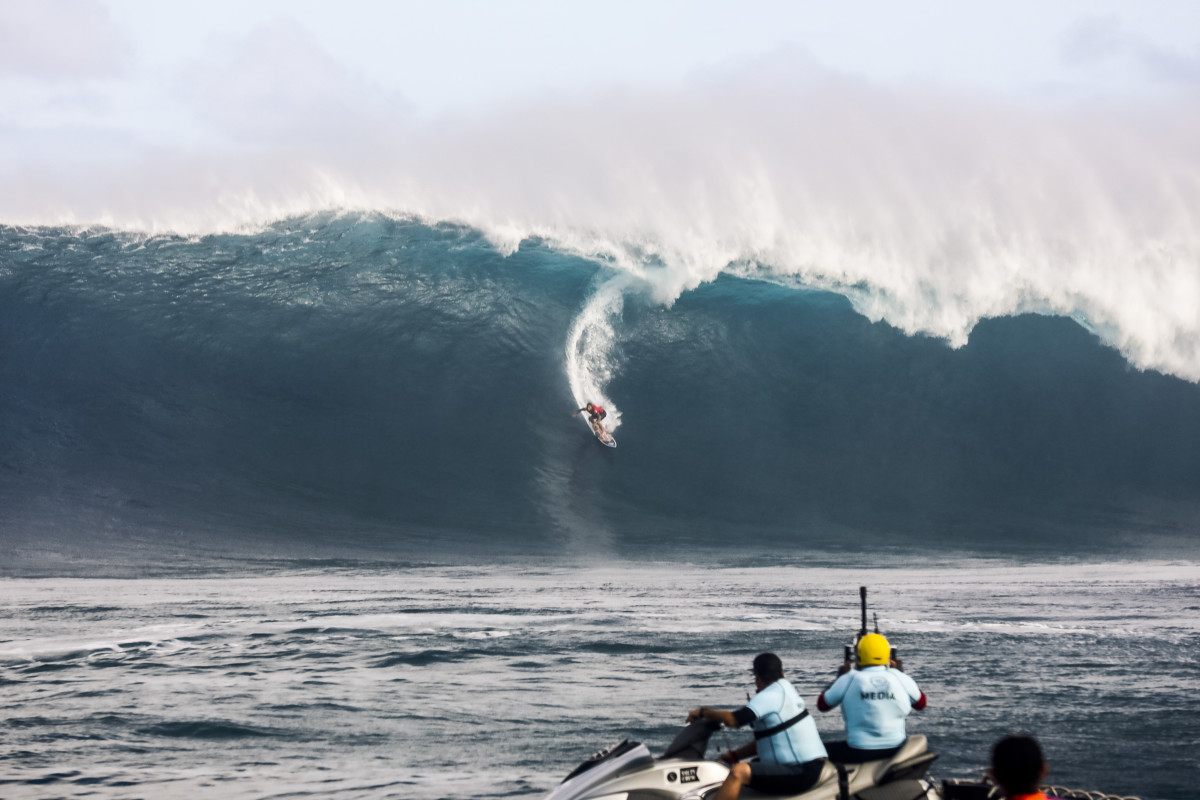
Jaws is the kind of wave everyone thinks about when picturing gigantic surf. For the longest time, it was thought the biggest waves in the world would break at Jaws and it still has that potential. There is a degree of difficulty at Jaws unlike anywhere else on the planet, meaning this is a true waterperson's big wave that requires in-depth knowledge of the conditions, bathymetry, safety, equipment and so much more before even getting in the water. In December 2024, Benjamin 'Sancho' Sanchis surfed perhaps the largest wave ever seen at Jaws, a towering 64-foot wave that ended up landing him in the ER for the pleasure. He's fine, of course.
Jaws needs a massive XL swell to get cooking. Similar to Maverick's, you'll need to keep an eye on a 20-to-30-feet plus north-northwest swell, with a long period upwards of 13 seconds, and only comes alive in the northern hemisphere's swell season – November through to March. Best bet to see Jaws working is likely through December, when the North Pacific really gets cranking. Notable surfers: Billy Kemper, Aaron Gold, Kai Lenny, Yuri Soledade, Paige Alms, Keala Kennelly, Nathan Florence, John John Florence, Ian Walsh.
Nazare – Oeste region, Portugal
Though holding the record for producing the biggest waves in the world, Nazare hasn't been without its controversy. Laird Hamilton famously condemned the joint as a mush burger, before flipping that script after surfing it. Nazare's also become a Mecca for any big wave surfer looking to take a swing at gigantic waves – and despite efforts from regular surfers, there is no dedicated or formal safety team when the waves start to jack to the XXL range. Nazare had been surfed by the local bodyboard crew for decades, before Dino Casmirio contacted Garrett McNamara in 2010 – which lead to Gmac scoring the world record for biggest wave surfed in 2011.
This put Nazare on the map, sending out a global, heralding call that big waves in Europe were there for the taking. Nazare needs a bruiser of a North Atlantic storm to bring it to life. Swells above 310 degrees are perfect, as they hit the deep, underwater canyon and refract back to the beach, intersecting with other waves to create those gigantic A-frames. You can watch from the cliff, looking straight out at the wave, likely along with tens of thousands of other onlookers. Contrary to the title of HBO's hit surf series '100-Foot Wave' a 100-foot wave has yet to be surfed there. Whether surfing has reached its limits at Nazare is yet to be determined. Notable surfers: Garrett McNamara, Andrew Cotton, Sebastian Steudtner, Maya Gaberia, Rodrigo Koxa, Justine Dupont, Lucas Chumbo, Nic Von Rupp.
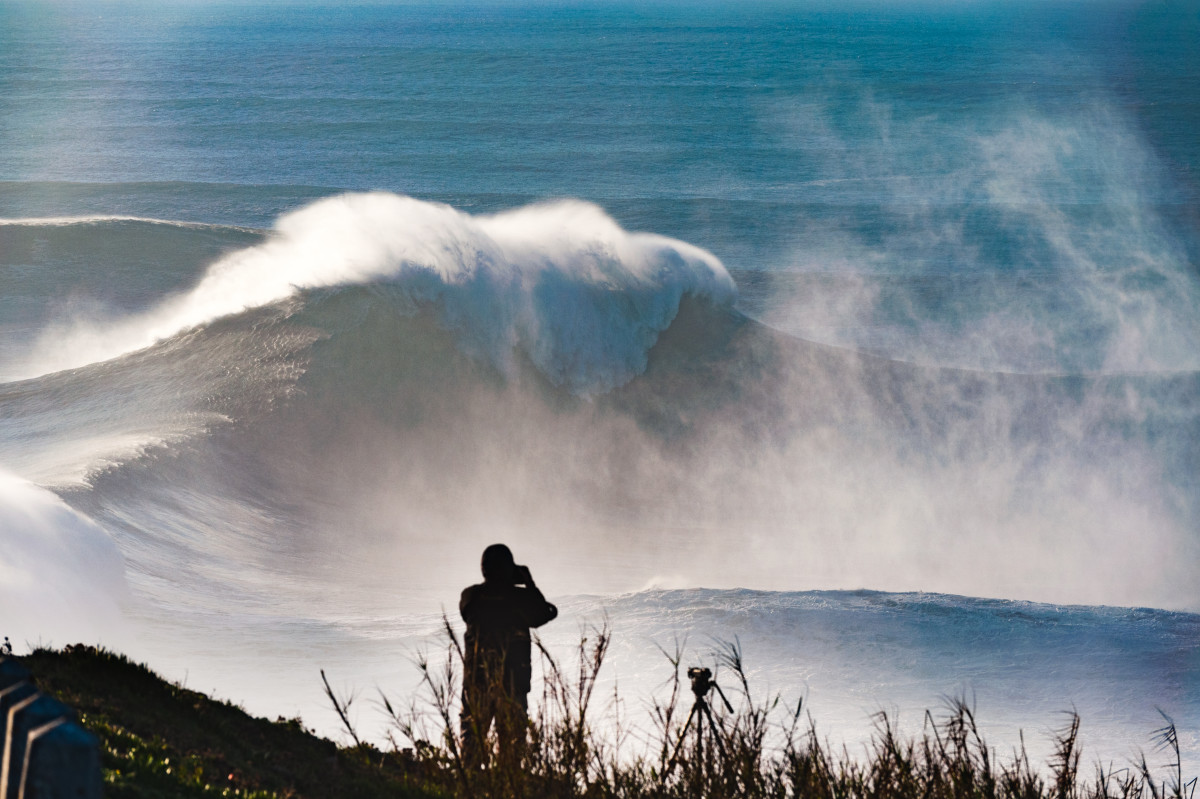
To Mane/Getty Images.
Killers – Todos Santos, Mexico
Located about 15 kilometers off the coast of Isla Todos Santos is an open-ocean wave called Killers. This is a world-class wave that breaks over an underwater canyon, which helps organise swell into hulking, gigantic lumps of ocean, suited to only the most daring of big wave surfers. In the 1980s, California's Marty Hoffman rode Killers occasionaly – it was later in the decade when Tom Curren and Dave Parmenter showed up and put this surf zone on the map.
Taylor Knox further solidified Killers' position in the big wave conversation after surfing a giant 52-foot wave there. Followed by Brad Gerlach's incredible 68-foot monster in December 2005. Watch for swells out of the Gulf of Alaska. Killers is only accessible by boat from the Ensenada Harbor. Notable surfers: Tom Curren, Dave Parmenter, Marty Hoffmon, Greg Long, Carlos Burle, Nic Lamb, Brad Gerlach, Taylor Knox.
Cortes Bank – San Diego, California
Perhaps one wave on this list where the potential hasn't quite been tapped out yet. Cortes Bank is located way out in the Pacific Ocean, around 175 kilometers west of San Diego. This wave is known for swells breaking over an underwater mountain (called a seamount), with its shallowest peak becoming visible during lower tides. Swells, which are feeling the ocean floor as they travel, come into contact with this mountain and start breaking on top of it. The wave was named after Hernan Cortes, a Spanish ocean explorer who helped with the initial colonization of America. It's about as remote as they come, with surf crews needing to be prepared for any circumstances.
Back in 1962, ship captain Harrison Ealey become the first person to surf Cortes Bank. It wasn't until 2001 though when this wave gained mainstream traction – thanks to Matt Parsons, Brad Gerlach, Ken Collins and Peter Mel, who set about surfing it. You may recall Matt Parsons' 65-foot wave there, bagging him $60,000 during the Swell XXL Big Wave Contest. There's sure to be more to come from Cortes Bank over the years. Notable surfers: Mike Parsons, Brad Gerlach, Ken Collins, Peter Mel, Shane Dorian, Rusty Long, Katie McConnell.
Mullaghmore – County Sligo, Ireland
Europe's most famous big wave slab, Mullaghmore is an Emerald Isle marvel. Sitting on the west coast of the country, Mully is primed for picking up swells out of the North Atlantic and translating them into gigantic, cold water waves. The realm of what was possible in Ireland was blown open by 2009 surf flick 'Powers of Three' featuring Tom Lowe, Fergal Smith and Mickey Smith – the first well-documented Irish winter to ever grace the silver screen.
The wider surf community may have known about Ireland, but it was really this film that put the country on the map. Nowadays, big wave surfers in Europe fly between Portugal and Ireland to get their wave fix. Back in 2020, Mully regular Conor Maguire surfed perhaps the biggest wave ever seen there. A mutant bomb so unfathomably tall, it blocked out the sun. A tight-knit, local safety crew, helmed by Dylan Stott, are omni-present in the water – and it's always best to check in with this team before heading over that way. Look out for a big W or SW swell in order to set Mully off. Notable surfers: Tom Lowe, Tom Butler, Andrew Cotton, Mickey Smith, Fergal Smith, Seamus McGoldrick, Gearoid McDaid, Noah Lane, Barry Mottershead, Peter Conroy, Ollie O'Flaherty.
Waimea Bay – North Shore, Oahu
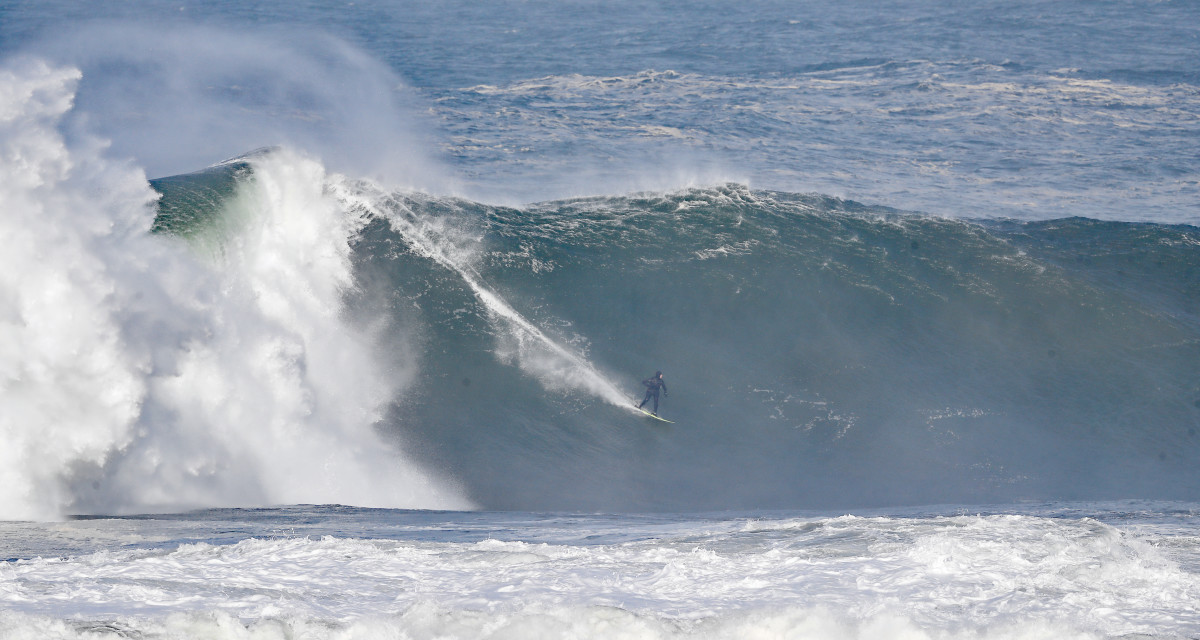
The original big wave. Waimea Bay holds a special place in surfing folklore as the home of big wave surfing. It is the venue for The Eddie Aikau Invitational – a surfing competition only held when conditions are at their biggest. Swells from the NW to N will aim directly at the shore of Waimea, creating 20-to-40 feet Hawaiian-scale faces, a gigantic beachbreak.
There's also a deep water channel which funnels energy directly into a shallow lava reef and sand shelf inside the bay. It's understood that the earliest documented surfers to ride Waimea were a group of Hawaiian and Californian lifeguards; John Kelly, Wally Froiseth, Fran Heath and Riley Thompson. It wasn't until the 1950s that Greg Noll cemented Waimea's legacy at this hectic and beloved paragon of big wave surf spots. Notable surfers: Greg Noll, Brock Little, Billy Kemper, Justine Dupont, George Downing, Peter Cole, Buzzy Trent, Kelly Slater, Luke Shepardson.
Teahupo'o – Tahiti, French Polynesia
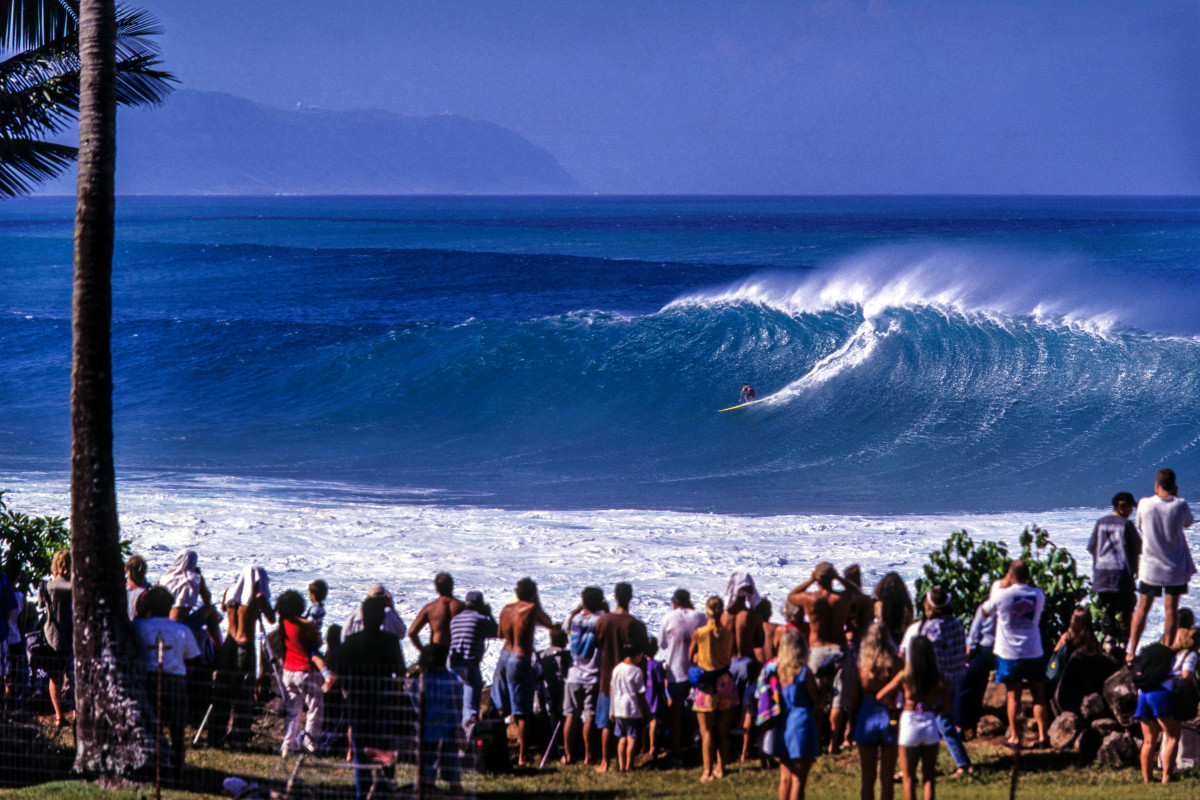
Situated off the coast of Tahtiti is a wave that regularly drops jaws to the floor. Teahupo'o is a miracle wave, that breaks over razor sharp reef and requires a level of dedication only exhibited by the best big wave surfers on the planet. Swells out of the South Pacific Ocean go from deep-water to super shallow in a matter of moments, creating those thick-lipped and heavy waves that amaze whenever they get going. Teahupo'o has been surfed by local Tahitians since the 1950s but was introduced to the world by Thierry Teiva in the 1980s.
By 1991, the local crew took Mark Foo, Mike Stewart and Shane Dorian out there with the resulting imagery making the wave look impossible to surf. In the year 2000, Laird Hamilton towed one of the heaviest waves ever seen out there – and Teahupo'o's mythos was complete. In May 2003, Keala Kennelly would take to Teahupo'o, surfing a legendary wave that remains one of the spot's most famous images of all-time. Notable surfers: Laird Hamilton, Keala Kennelly Michel Bourez, Matahi Drollet, Eimeo Czermak, Vahine Fierro, Matehau Tetopata, Haunui David, Raimana Bastolaer, Kauli Vaast, Aelan Vaast.
Shipstern Bluff – Tasmania
One of the world's most notorious waves, Shipstern Bluff can look every part the mutant it is. Powerful, unpredictable and steps in the wave the size of buses, it's an insanely challenging wave to surf and even more difficult to manage the protruding rocks, rips and all other number of hazards that come with surfing Shippies. First surfed by local chef David Guiney in the late 1980s, early 1990s, the wave broke out into the mainstream courtesy of images from Sean Davey in 2001, documenting Koby Abberton and Mark Mathews during a wild session out there.
Shipstern Bluff needs a large, powerful SW swell to get moving during the southern hemisphere's winter months. Those SW swells hit a submerged rock shelf causing the wave to break violently. The steps in the wave are also a result of this shelf, as swells are compressed and forced upwards. This is not a place you want to be caught inside, unless being ping-ponged over a dry reef is your idea of fun. Notable surfers: David Guiney, Mark Mathews, Koby Abberton, Dylan Longbottom, Russell Bierke, Andy Irons, Zeb Critchlow, Jame McKean.
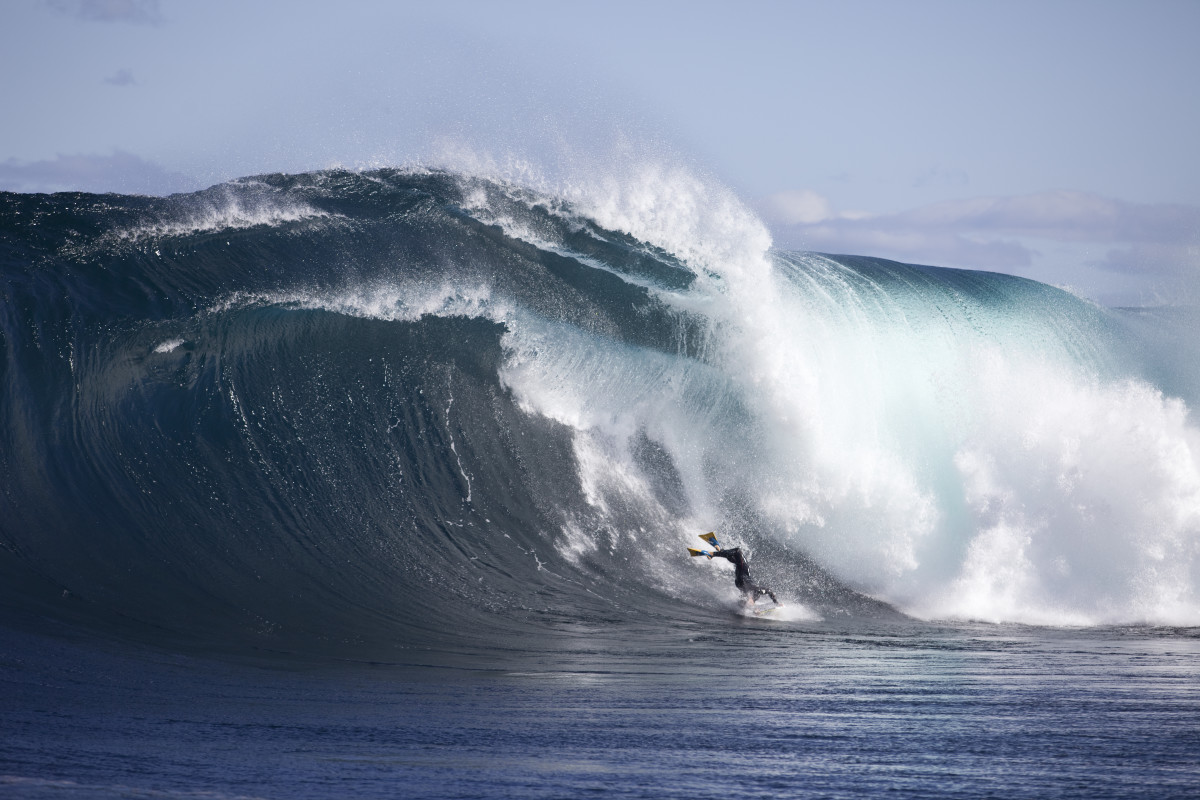
Punta Galea – Basque Country, Spain
Another of Europe's iconic big wave spots, Punta Galea is situated in the mouth of the River Nervion in Getxo – about 50 kilometers west from the Basque's other gorgeous river mouth wave, Mundaka. Each year, the Punta Galea Challenge is held, testing some of the world's best big waves surfers in extreme conditions. Big waves form when swells out of the Bay of Biscay combine with the river's outflow, helping create powerful and steep wave faces. It is unknown who the first surfer to wrangle Punta Galea is, but Basque surfer Natxo Gonzalez has certainly helped put this surf spot on the map, thanks to an absolute stellar performance during the 2010 Punta Galea Challenge.
A few years later, in 2013, Twiggy took home the win during an incredible run of swell, which showcased what Punta Galea is capable of. Nowadays, there's a hardcore local crew out there. Sometimes solo, no safety. Just them and the gaze of the iconic lighthouse on the headland. Notable surfers: Natxo Gonzalez, Grant 'Twiggy' Baker, Aritz Aranburu, Nic Lamb, Justine Dupont.
Punta de Lobos – Pichilemu, Chile.
Literally translated to Wolf's Point, Punta de Lobos is located in Chile, facing out into the wild South Pacific – and is one of the world's most iconic big waves. A powerful left-hand pointbreak that can handle gigantic, powerful swells, regularly up to 50-feet under the correct conditions. Up until recently, Punta de Lobos was under serious threat from real estate development, but a crew led by surfer Ramon Navarro managed to protect the wave as it is.
In 2017, Punta de Lobos was designated as a World Surfing Reserve so future generations get to witness this incredible marvel of nature. On its day, you can surf Punta de Lobos for up to a kilometer on a mid-to-low tide. The bathymetry is a mix of sand and reef with all kinds of rocky hazards in your way. Notable surfers: Ramon Navarro, Rafael Tapia, Cristian Merello, Leilani McGonagle.
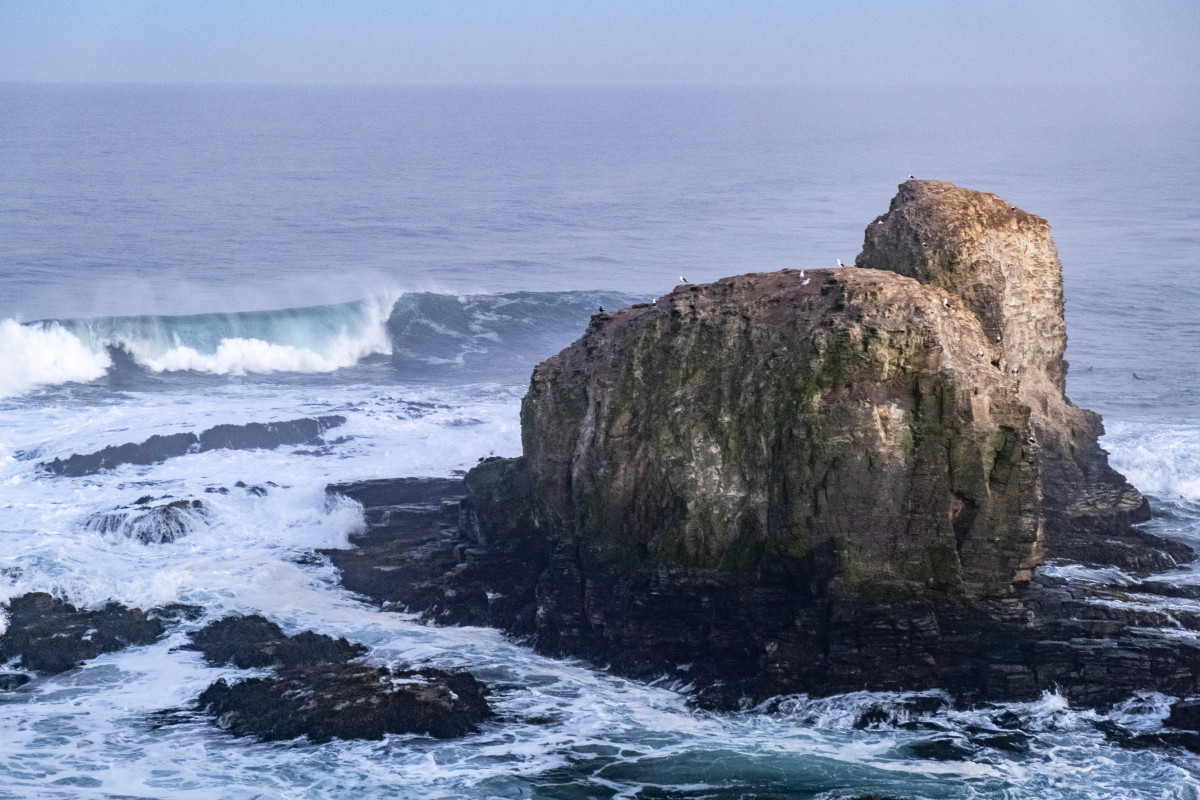
Dungeons – Cape Town, South Africa
There are many big, powerful waves in South Africa, but Dungeons arguably takes the crown for meanest, most badass big wave around. First ridden by Pierre de Villiers and Peter Button in 1984, it was named due to the experience of being held underwater for consecutive waves, making it feel as if you were trapped in a dungeon. In the year 2000, Red Bull held their Big Wave Africa event there, running in 15-feet waves and then again in 2001, though it was called off due to great whites being spotted in the line up.
Dungeons is considered one of the most tricky big waves to surf – you need a lot of paddle power for one, and the foreboding cliffs you face can create all kinds of mental tension in the water. Notable surfers: Pierre de Villiers, Peter Button, Grant Baker, Matt Bomley, Frank Solomon, Mike Schleback, James and Simon Lowe, Chris Bertish, Jurie Van Dyk.
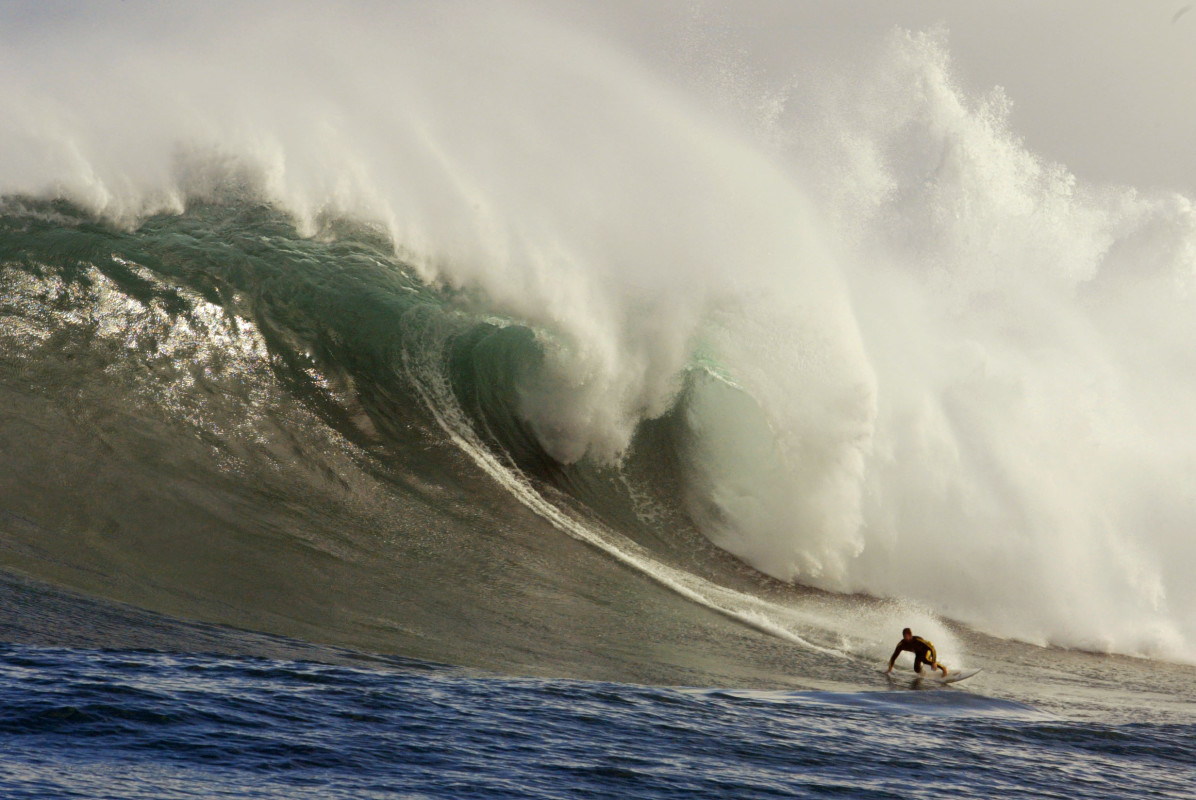
Grant Ellis/Getty Images.
Related: 7 of the World's Most Dangerous Waves (You Might Want To Keep Your Distance)