
- Beny Huckaby
- •
- bikemag.com
- •
- November 22, 2025
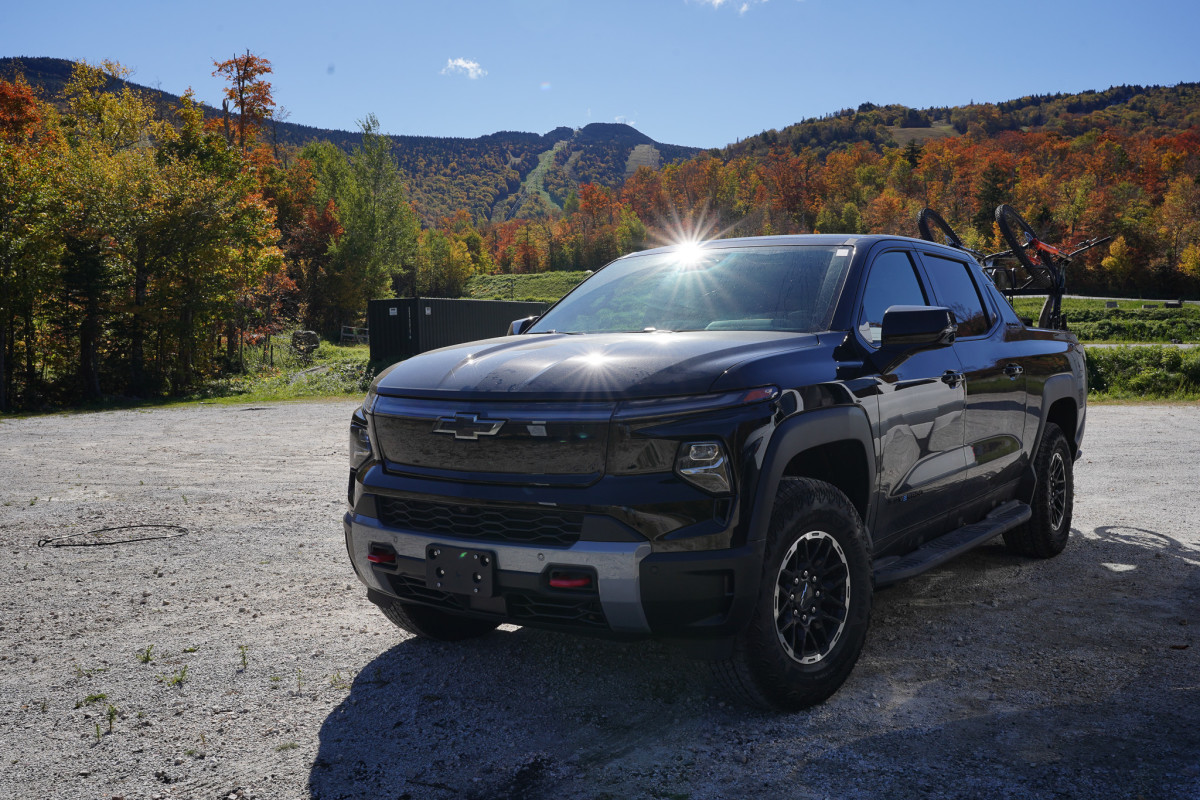
The last time I drove up to Killington, it was in my old Ford E-350 Super Duty with a 5.4L engine, a spacious beast that got about ten miles to the gallon on a good day. I eventually sold it for a high-top campervan that’s now my daily driver. If it’s not already obvious, my priorities have always leaned more toward space and preparedness than fuel economy. I like having room for two to four bikes, all my tools, my photography gear, and plenty of room for spares and other just-in-case gear. So when Chevy suggested I try the Silverado EV Trail Boss for my two-week trip through Vermont and the Adirondacks, I didn’t even bother hiding my skepticism.
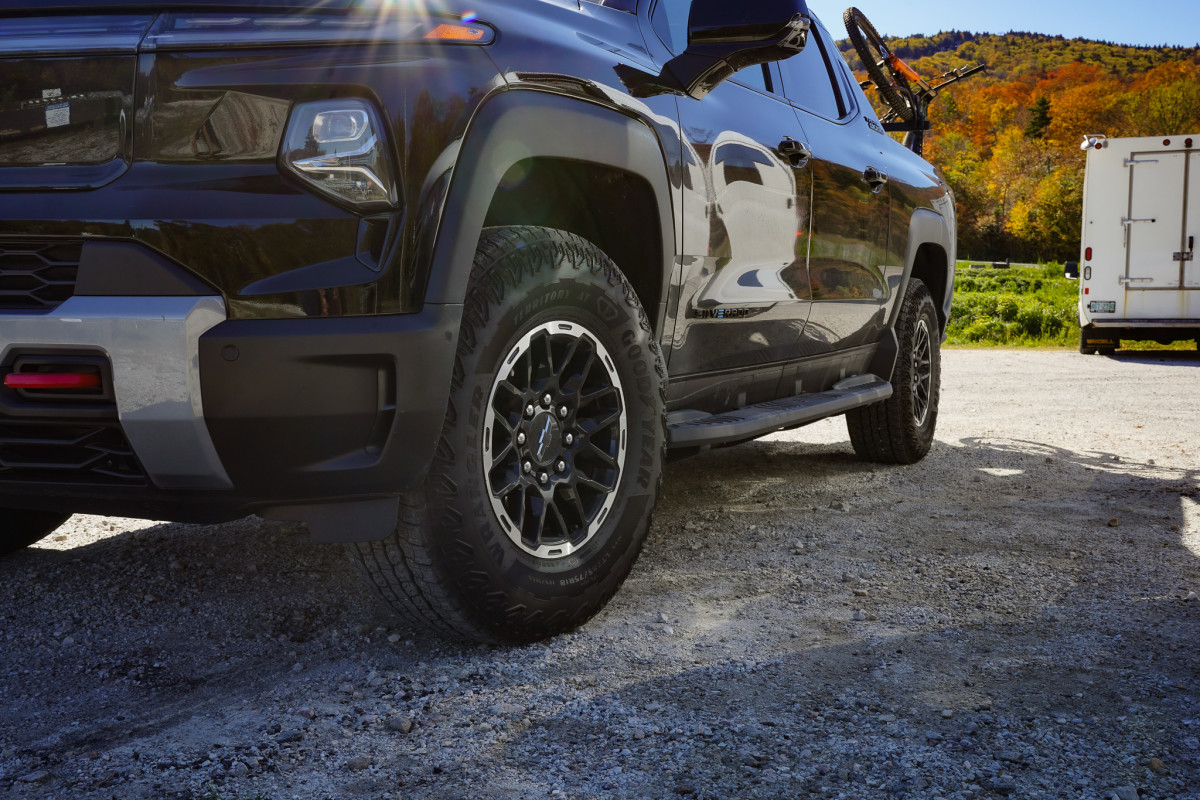
Photo: Beny Huckaby
I was set to travel to the U.S. Open of Mountain Biking, followed by the Lake Placid Downhill World Cup a week later. I not only needed to haul all my gear but also run a remote work setup along the way. The folks at Chevy started rattling off some stats: a full-size crew-cab truck with nearly 500 miles of range, rolling on 35-inch tires with a 2-inch lift, and laced with 110v power outlets front to rear. You’ve got my attention.
First Impressions
Before I knew it, I was packing all my gear into the Silverado EV. After rolling away in my new ride, the rig quickly began to show its stars; it was quick, quiet, and rather intuitive. Within minutes of setting my seat position, connecting my phone, and getting the mirrors dialed, I was struck by how easily the truck interfaced with me and everything I do. From never having to turn the car on or off (it senses when you leave), or even lock or unlock (it knows that too), I was impressed.
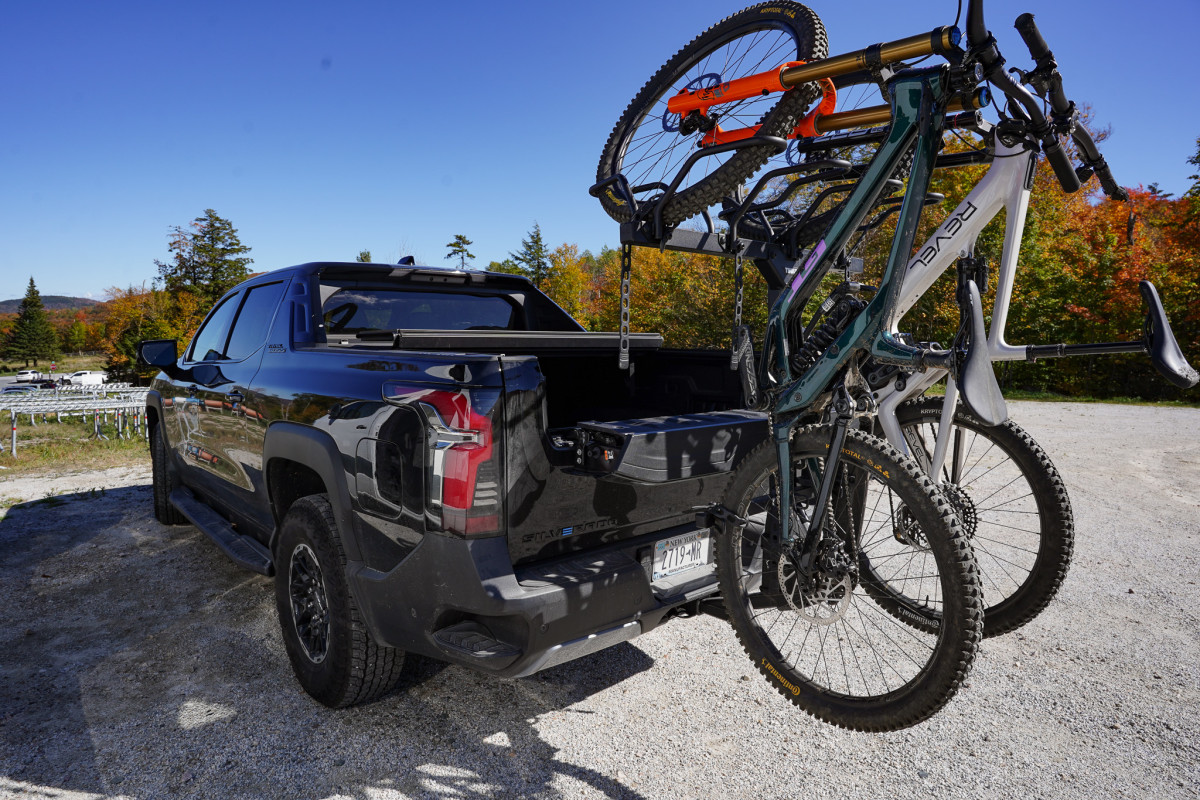
Photo: Beny Huckaby
My first leg was a three-hour drive straight to Killington Bike Park, loaded to the gills with gear - including 2 bikes on a Thule ReVert 4-bike vertical carry hitch rack. Typically, in either of my past rigs, I’d be lucky to get to the resort with a quarter tank left. This time, I pulled into the hotel with almost 300 miles of range on the dash. For someone used to calculating every climb in fuel cost, that alone was enough to make me rethink what a road trip could look like.
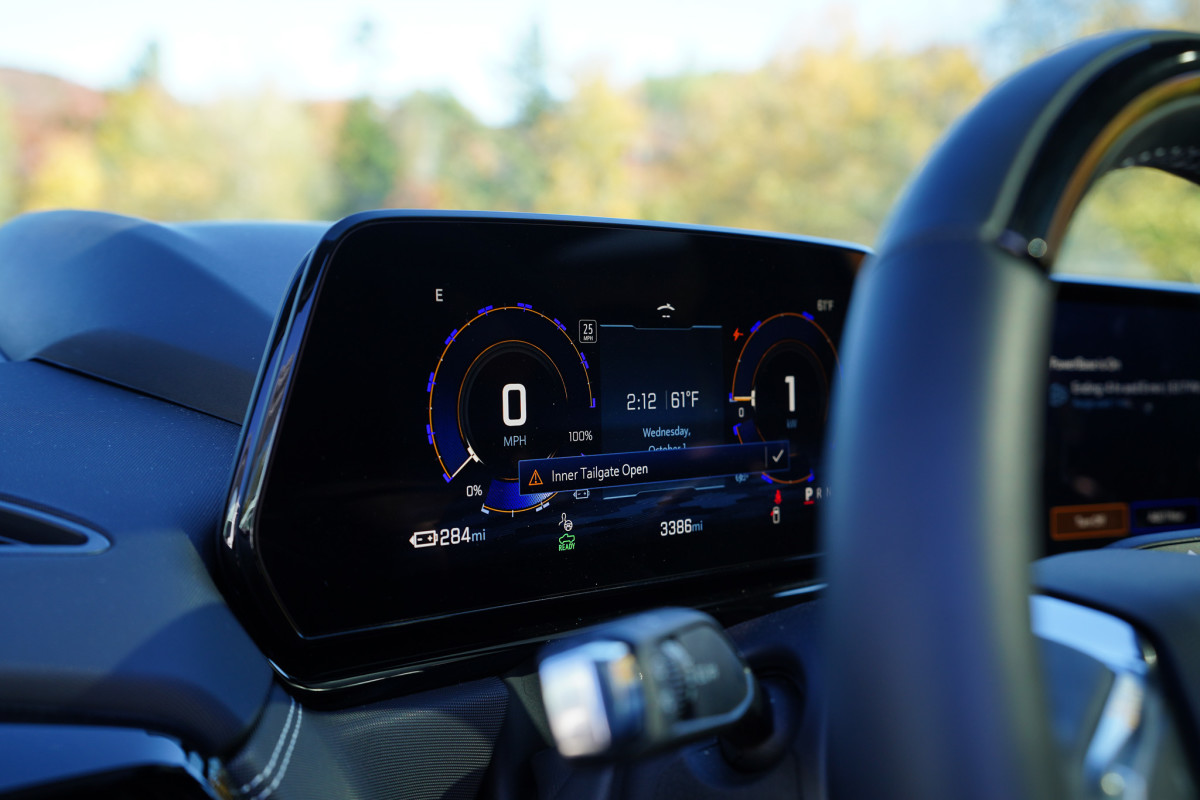
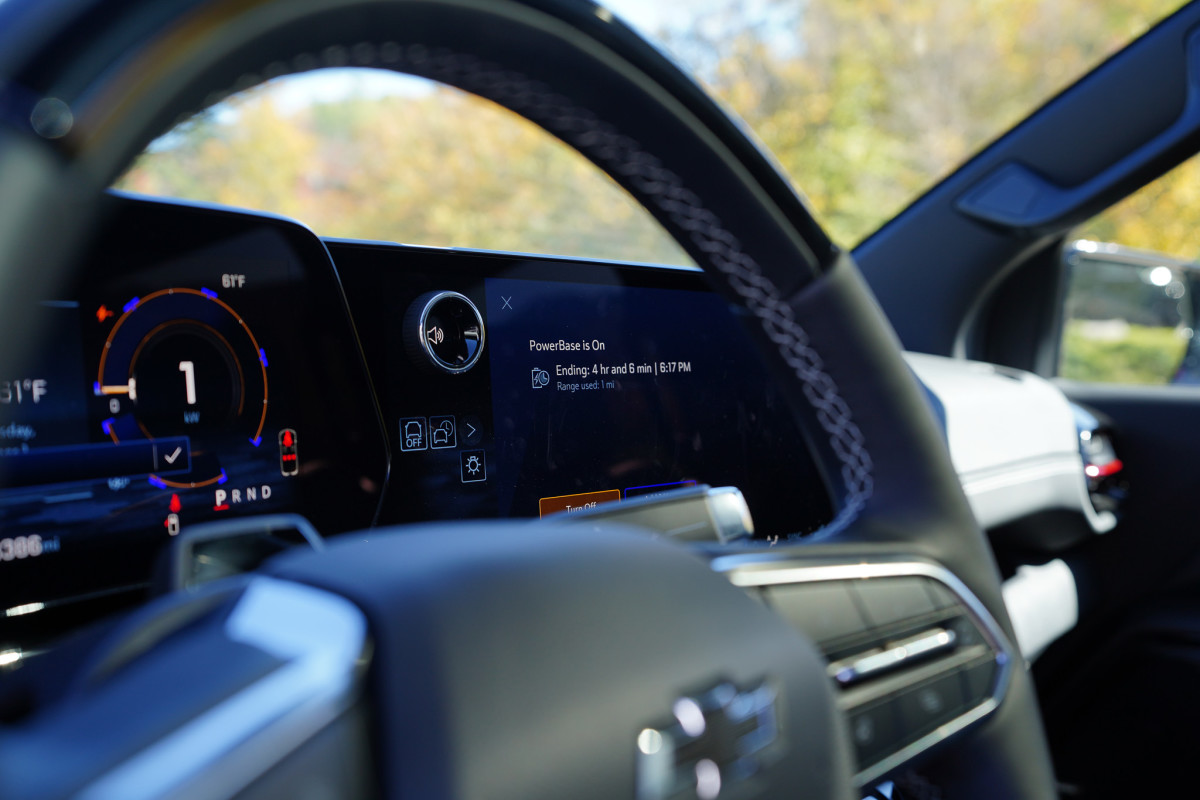
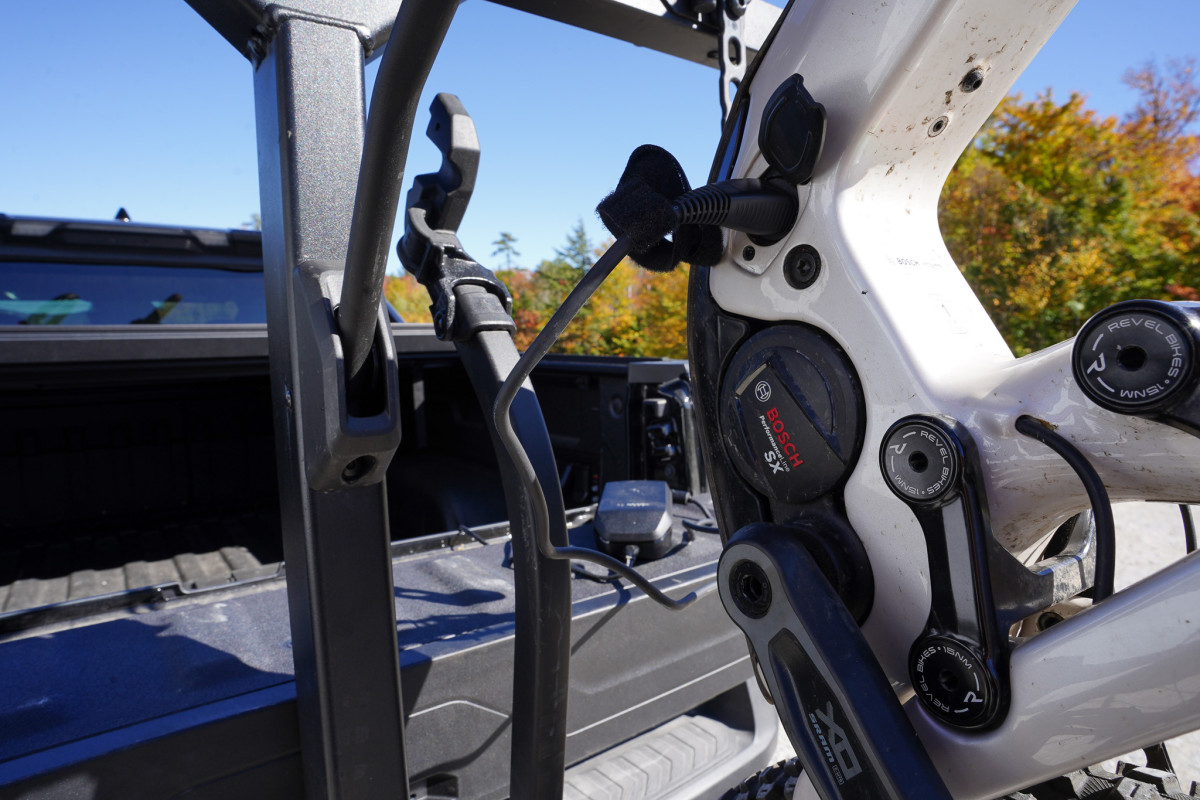
The truck really began to shine once the race was over. In an effort to pack as much test riding in as possible on the Revel ReRun I’ve been reviewing, I made it my mission to hit as many spots as possible. Each day, I'd work a bit in the morning over coffee before taking off from Killington and heading to the next riding zone, bouncing back and forth between trail laps and computer/phone time. I brought my Starlink Mini with me, so I’d put the truck into power bank mode and set up a mini office in the back while the e-bike recharged. The Silverado’s 10.2 kWh battery basically turned any parking lot into my office, workshop, and living room. Something that I'm used to with my much larger and less efficient campervan.
Standout Features
Once I got comfortable behind the wheel and began playing with the drive modes, and that’s where things got a little wild. Click the Silverado EV into Sport or My Mode, and both motors will unleash 725 horsepower in relative silence. The first time I mashed the pedal, the truck launched so hard that I was instantly giggling. The instant torque, no engine noise, and power that pins you back in the seat. If you were to venture off the pavement and ditch the traction control, let's just say the truck wouldn't hesitate to slip the tires. It’s ridiculous in the best way possible.
Then there’s Sidewinder Mode, which turns the front and rear wheels in the same direction, letting the truck crab walk diagonally. It’s a weird sensation, to say the least. Much more practical was the four-wheel steering, which made the full-size truck on 35s feel half its size. At crowded trailheads and parking lots, I could swing around tight corners or back cleanly into spots most trucks would need a three-point turn for.
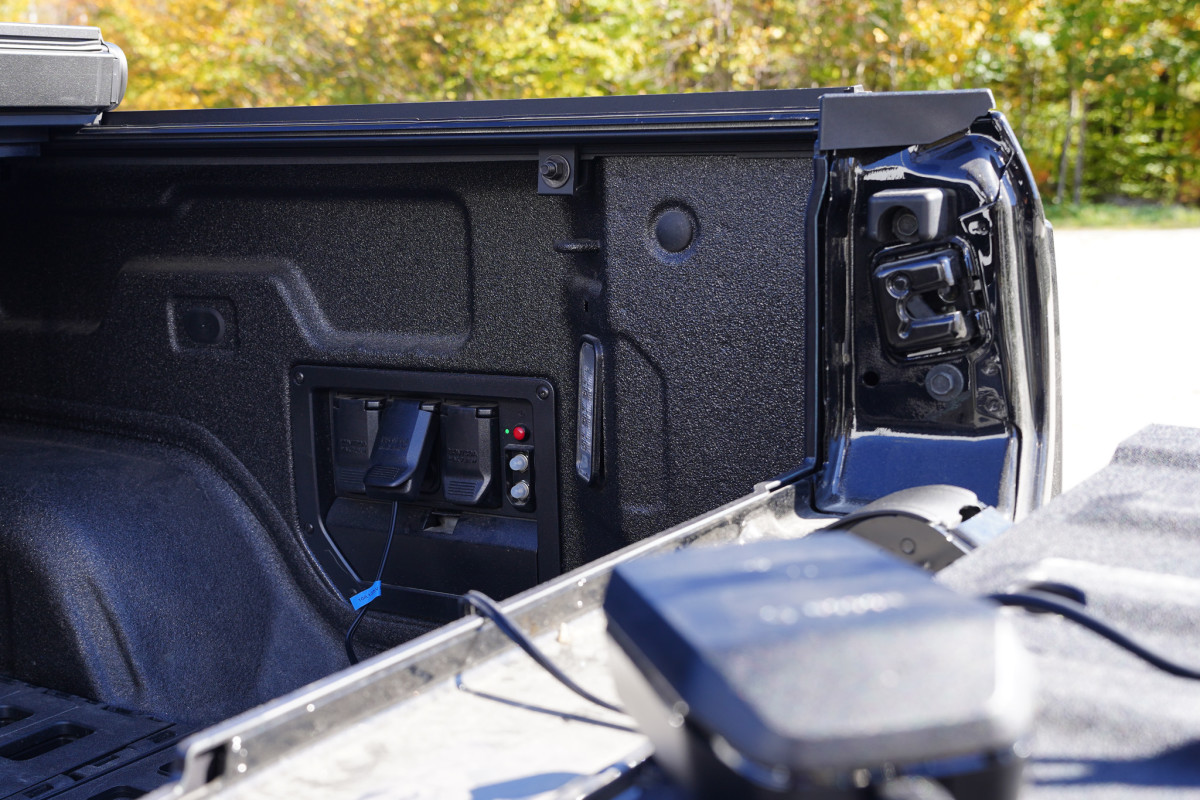
Photo: Beny Huckaby
Modern Luxury
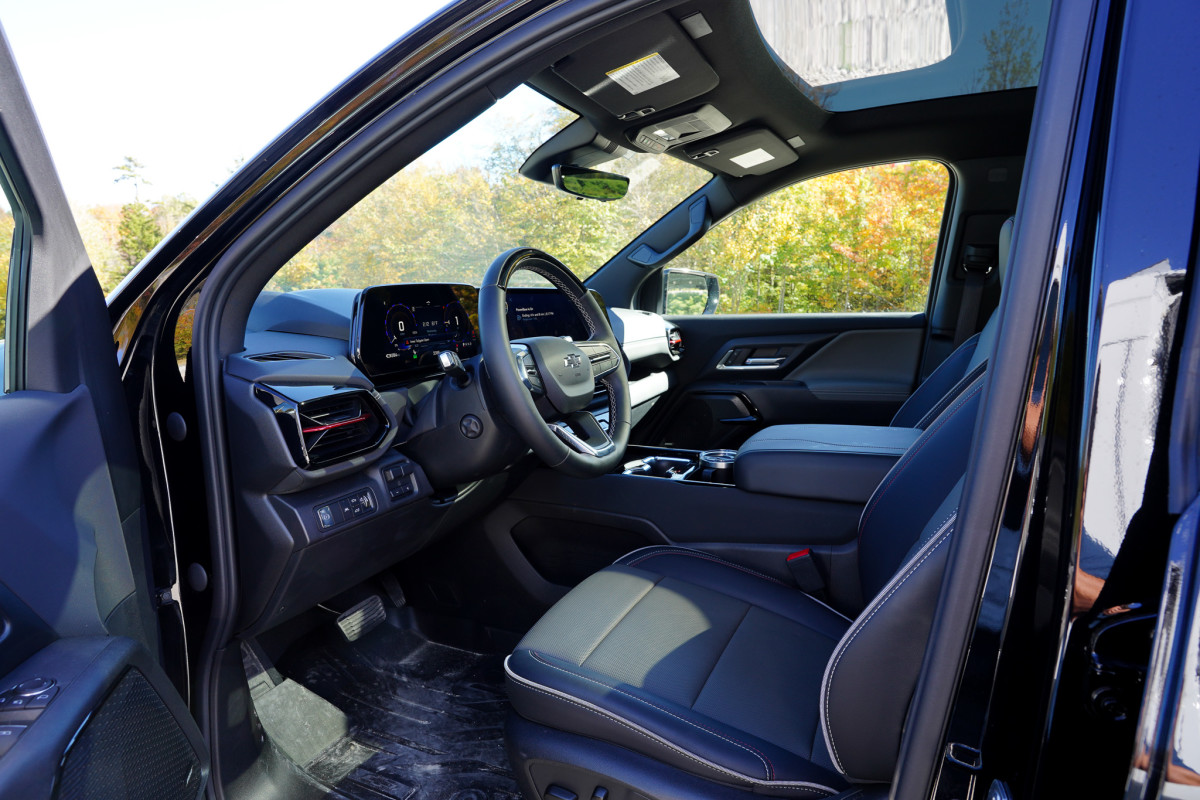
The comfort factor hit me just as hard as the torque. The Trail Boss cabin feels more like a modern workspace than a truck. The seats are thick, supportive leather, and the dash is dominated by a huge, crisp display that keeps the vital info right in front of your face while projecting your speed onto the windshield. With the air-ride suspension, I was getting through chunky access roads easier than ever and arriving at ski resorts without the truck even breaking a sweat. I was genuinely blown away when I purposely hit a pothole that would have given my van a run for its money. It felt like a pavement seam in the Silverado EV.
While I had a free charger right outside my hotel, the regenerative braking really did its thing on long descents. Coming down from Killington to Rutland would essentially buy me around 15 miles of range, and coasting downhill while watching that number go up is a pretty good feeling. The Silverado EV didn’t just make it easy to move between riding zones; it made the downtime useful as well. I charged my laptop and ran Starlink while recharging my bike, and I still had plenty of range to get back each day.
By the end of the second week, I’d logged over 80 miles on the e-bike and ridden six different trail networks, from Bolton Valley and Richmond trails near Burlington, then eastward to Perry Hill, and back down south to the Mount Peg and local Killington trails. I spent nearly every day out exploring, driving, and shooting, and still managed to put in around six hours of work from the truck. Aside from having a full campervan setup, that’s more ground covered and while remaining productive than I ever imagined I could pull off in a standard truck.
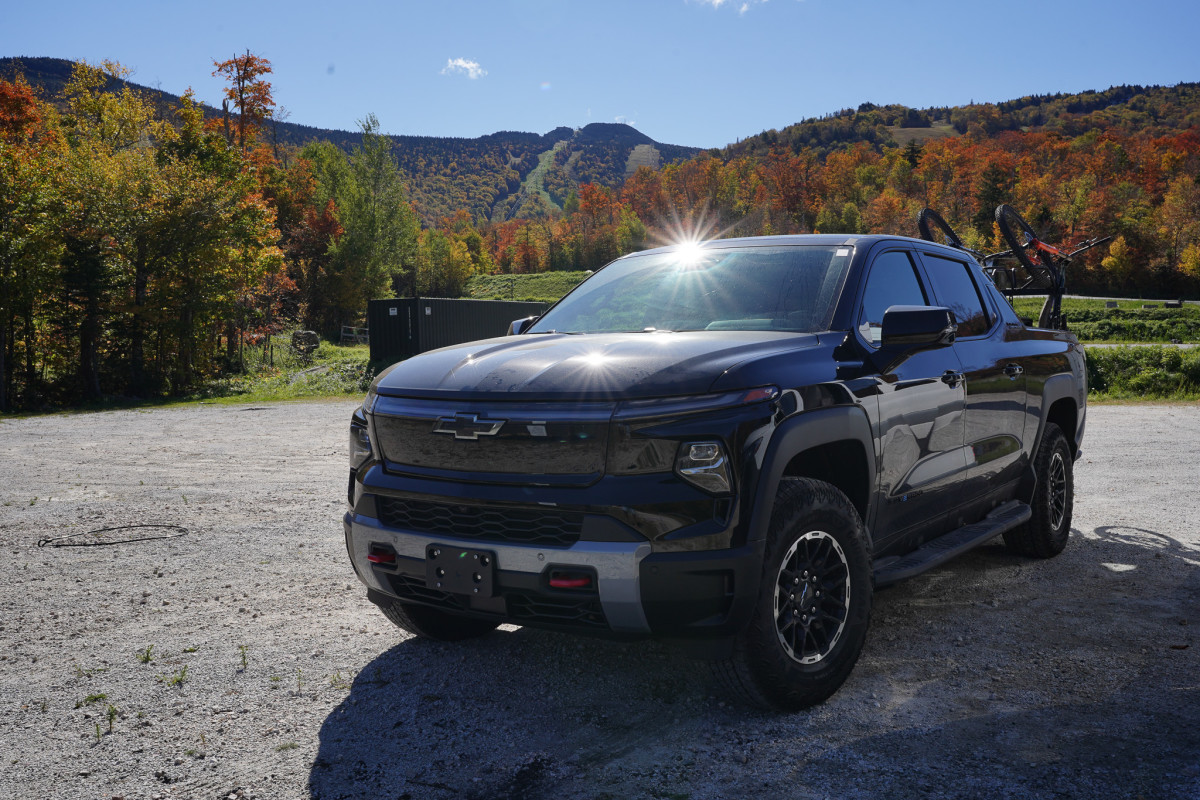
Photo: Beny Huckaby
Final Thoughts and Takeaway
The Silverado EV Trail Boss proved it isn’t just a vehicle—it’s a mobile base camp, a workspace, and a power plant that goes way beyond point-A-to-point-B. On this trip, it didn’t just haul me to some of Vermont’s best riding; it helped me squeeze in more miles, more trails, and more time away from the hotel than I ever thought I could manage on a two-week grind.