
- Ian Greenwood
- •
- powder.com
- •
- December 23, 2025
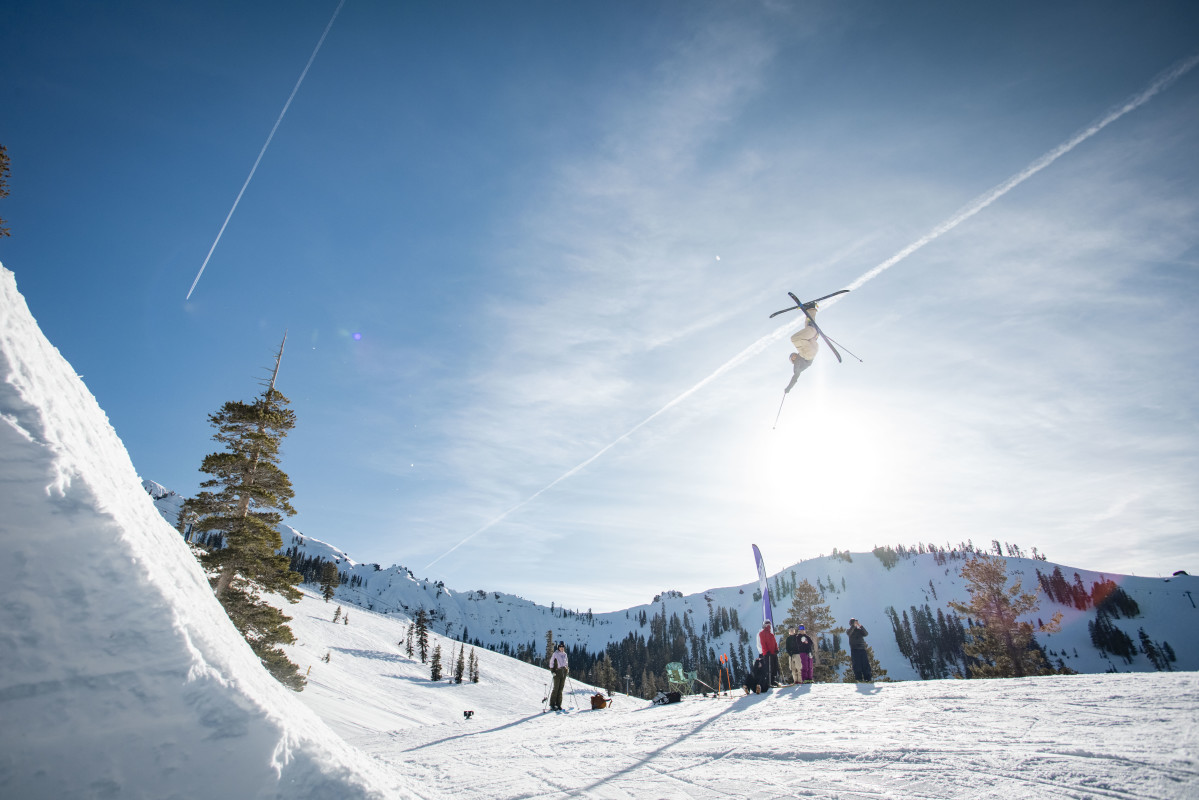
Growing up, pro skier Xander Guldman didn’t spend much time in the terrain parks at his home resort of Sugar Bowl, California.
The Lake Tahoe area mountain offered hand-built jumps, but when it came to learning tricks, he mostly relied on natural features like wind lips. Occasionally, he would venture to Boreal Mountain, where the freestyle setups were more consistent.
That approach worked out for Guldman, who became an elite freeride skier. The Sugar Bowl native, now 27, pairs technical chops with an uncanny ability to throw 360s, well, pretty much anywhere.
The next kid, though, won’t only have Sugar Bowl’s pockets of cliffs and steeps at their fingertips.
The 2026 POWDER Photo Annual is here! Look for a print copy on a newsstand near you, or click here to have a copy shipped directly to your front door.
Jake Pollock/Sugar Bowl
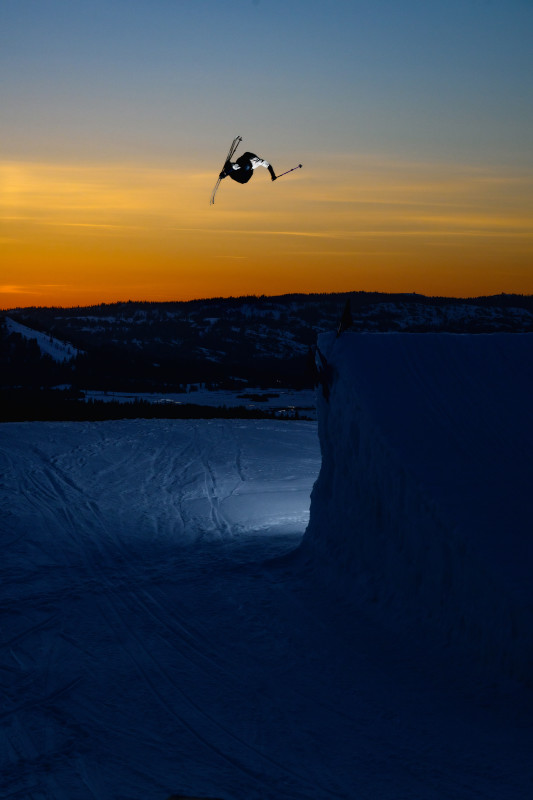
Ahead of last winter, Sugar Bowl announced that it had renewed its terrain park focus, casting the resort in a new light and making for a perhaps unlikely story.
Following a freestyle boom in the 1990s and 2000s, only a few ski resorts in North America have truly world-class parks where World Cup hopefuls gather. Sugar Bowl—a sleepier mountain often overshadowed by better-known, conglomerate-owned destinations around Lake Tahoe—wants to be the next home of those athletes.
The vision started, in part, with Bridget Legnavsky, who became Sugar Bowl’s CEO and president in 2022.
The New Zealander has spent decades working in the ski industry, including serving as the general manager of Cardrona Alpine Resort and Treble Cone Ski Area. One part of snowsports Legnavsky loves is watching skiers thrive and improve their skills. But she knows that without the right resources, that isn’t possible.
“I took it on as a responsibility to the community, to make sure that we had a facility here in Tahoe that would bring our young athletes” to the highest level, she said.
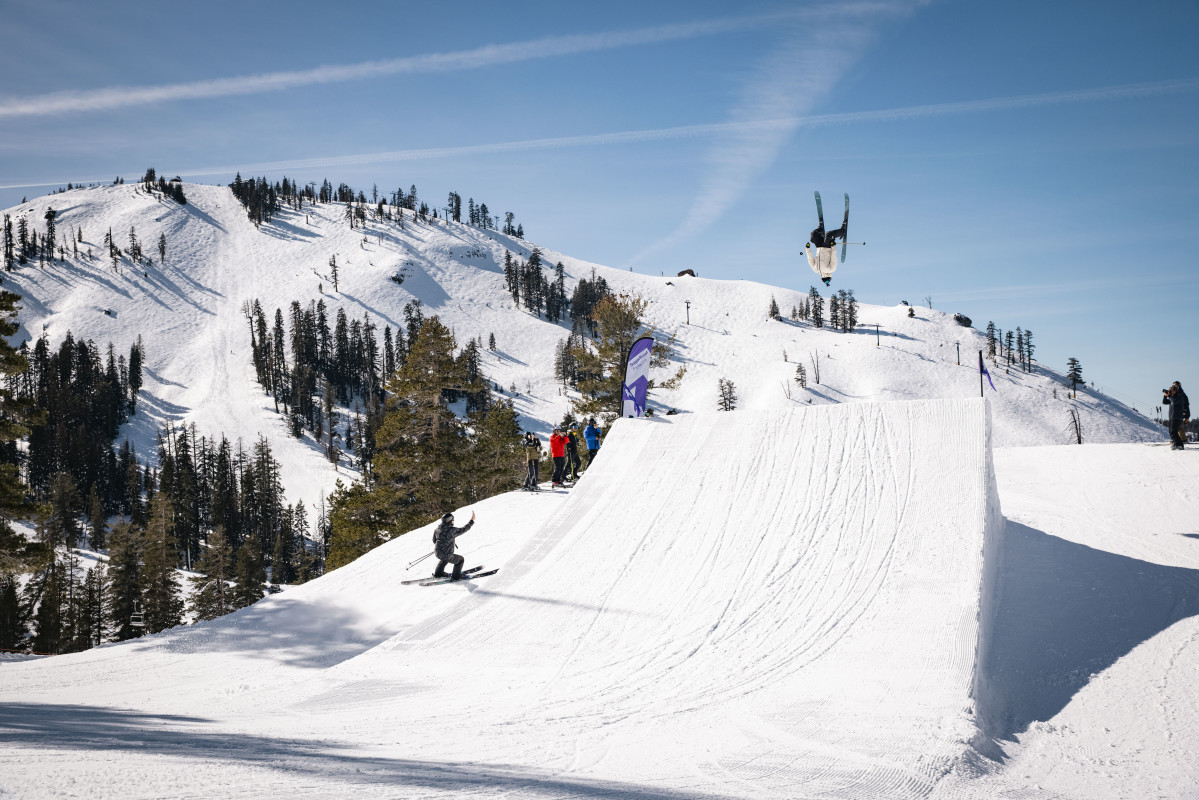
For Legnavsky, this meant installing multiple parks, from beginner to advanced, that meet skiers at each step, making progression safer. It starts with the introductory-minded Falconry terrain park and moves up to the Golden Eagle and Condor, which boast jumps spanning more than 60 feet. The bulk of the parks are positioned around the Christmas Tree Express lift—a short high-speed quad—facilitating fast laps.
Sugar Bowl
To create the parks, Sugar Bowl enlisted an all-star cast of terrain park specialists. Famed jump builders Brandon Dodds and Charles Beckinsale joined. The parks are overseen by Mike Schipani, who, before coming to Sugar Bowl, managed freestyle at Northstar Resort and worked on the towering X Games builds. Legnavsky called it “a combination of good humans coming together with a lot of passion.”
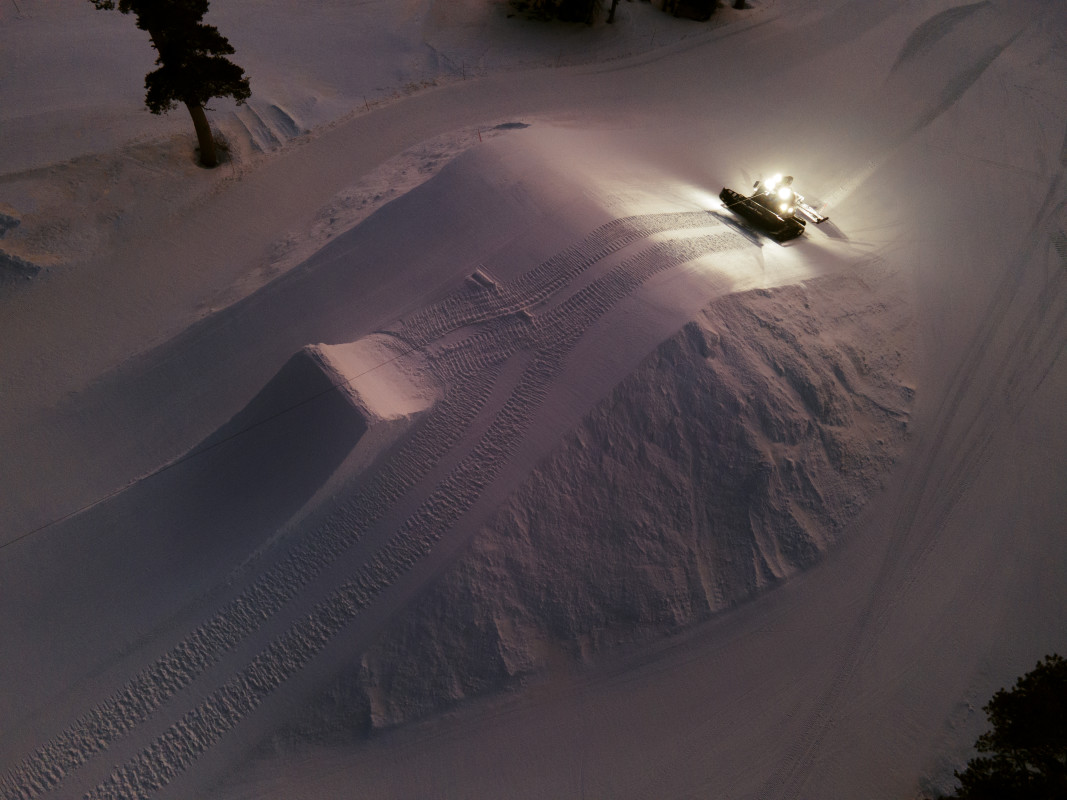
There was also dynamite. Last winter, when the parks debuted, the crew relied on Sugar Bowl’s natural snowfall to construct the features. But to ensure crews can build the jumps in the Golden Eagle area without mountains of snow, Sugar Bowl’s staff constructed a trio of mounds using rocks this past summer.
In Schipani’s experience, this can usually be done with dirt. However, the slopes around the Christmas Tree Express lift were rocky. That’s what necessitated the explosives.
“We used thousands of charges of dynamite, blew up the surface into different-sized fragments of rock, and then it was excavated into the shape of the jumps,” said Schipani, noting that more “earthworks” are planned for the medium-sized and busiest park, Peregrine Ridge.
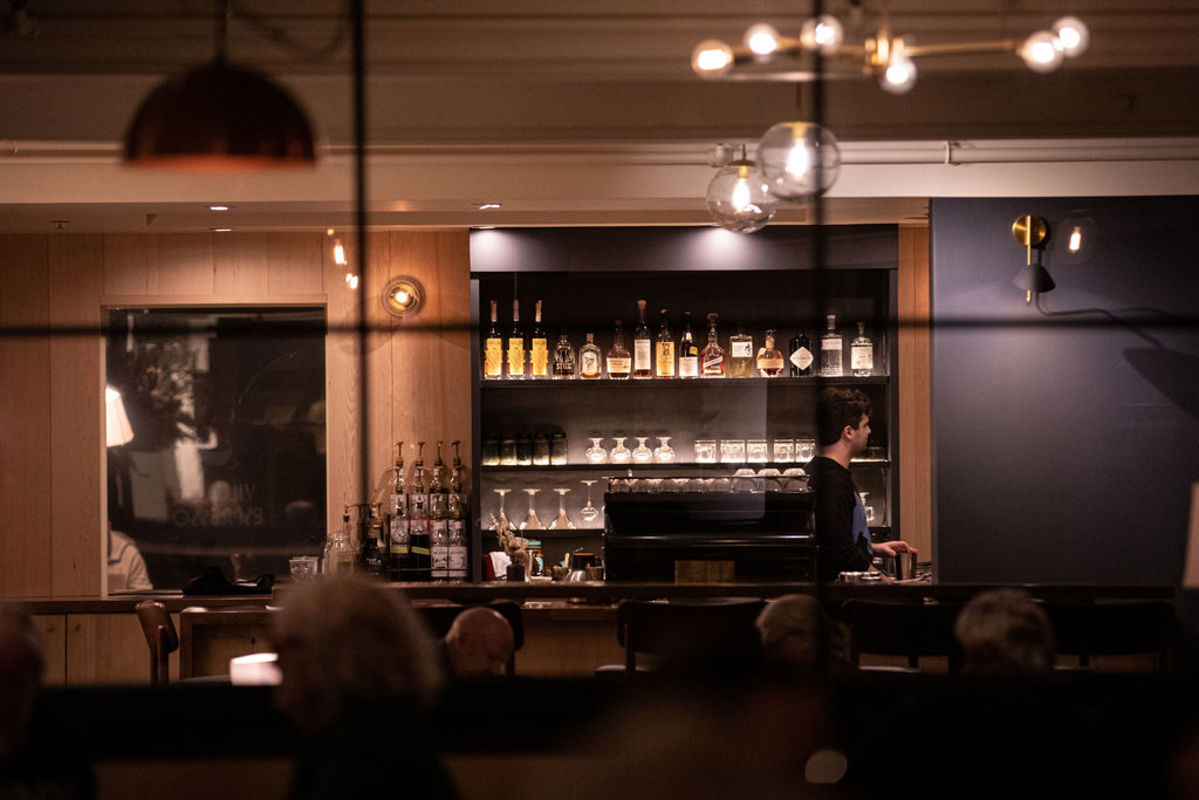
The terrain parks align with Legnavsky’s broader goal: ensuring Sugar Bowl remains, as she put it, relevant and “the place to be.” That’s involved far more than sculpting jumps and installing rails. The lodges are undergoing refurbishment, and the gondola from the parking area to the resort is slated for an upgrade, among other improvements, giving Sugar Bowl a more chic look.
Sugar Bowl
The developments may raise the hackles of some longtime Sugar Bowl skiers worried their haunt is changing. Still, resort leaders have said they’re focused on preserving the vibe of the mountain, which is one of California’s oldest and dates back to the 1930s. Legnavsky, for instance, said that the resort has been “very intentional” about including spaces where people can bring their own lunches—or “brown bag” areas in skier parlance—even as some tweaks seem aimed at a moneyed crowd. Sugar Bowl retained the same architecture firms that designed the resort’s original structures, too.
Overall, it’s “a monumental injection to the maintenance of what we have,” Legnavsky said. “We're not trying to be big. We're trying to be big enough to be sustainable.”
The developments, of course, come at a significant cost, totalling an estimated $100 million, with some funds directed towards freestyle. This past summer, Sugar Bowl funnelled $2 million into the terrain parks, Legnavsky said, with another $1.5 million investment planned next summer. The funding came from the ski resort’s coalition of investors, who are also homeowners in the village.
The shake-up also includes the reintroduction of the Silver Belt, a historic race that started in the 1940s and has taken many shapes since. The latest iteration, which kicked off in 2024, is a freeride competition with skiers scoring each other rather than judges. They also build their own jumps on the course.
That model, which is relatively unique in skiing, espouses another of Legnavsky’s hopes for Sugar Bowl. Having seen the more negative parts of competition skiing, she wants the mountain to be a place where athletes leave feeling good. Beyond the top three, the rest of the results in the Silver Belt aren’t shared.
“All you can see is everyone just so stoked for the winners. You don't see people going, ‘Oh, I got fourth,” said Legnavsky. “Keeping it really untechnical and just about who we feel inspired us most that day is great.”
Guldman helped bring the Silver Belt to life. He said it was “the event that I had always dreamed of.”
Launching the Silver Belt, he continued, “took somebody like Bridget, who's down to take a risk and who is curious about what progression and growth within the sport looks like.”
Meanwhile, the parks are already drawing attention. Over the past three years, youth season pass sales to Sugar Bowl have increased by 350%, Legnavsky told me, with a “groundswell” of younger skiers now choosing to ski there. The resort’s Sugar Bowl Academy, a college prep school that offers on-mountain training, has seen growth, too, she noted.
Chris Segal/Sugar Bowl
Guldman saw the beginning of this firsthand last winter. Instantly, he said, some “crazy” park skiers started to show up, as a dedicated freestyle culture took root. At the end of the season, Sugar Bowl also received a stamp of approval from one of skiing’s heaviest-hitting teams—Faction filmed an edit there, drawing stars like Alex Hall and Matej Svancer to the slopes.
For his part, Guldman is more at home on exposed spines than in the park, so he initially found standing atop the jumps intimidating. But once he hit them, the hard work of Dodds, Schipani, Beckinsale, and others became obvious.
“They're perfectly built. It's super easy,” said Guldman. Now, instead of retreating into the backcountry to build your own jump, he added, “you can hit a 70-foot jump a dozen times before noon.”
Related: The Best Pair of Ski Gloves Won't Cost $200, They Create Memories