
- Izzy Lidsky
- •
- bikemag.com
- •
- November 14, 2025
BIKE Magazine aims to feature only the best products and services. If you buy something via one of our links, we may earn a commission.
Just the thought of airplane travel with a bike is enough to make most shudder, and that was before airplane travel got seemingly much harder in the last year. When I signed up for the Spirit World 100 gravel race in Arizona (which was a very, very cool race!), this very thought was almost enough to make me consider the 20+ hour drive from my home in Oregon. However, a tight turnaround from another bike event pretty much took driving out as a viable option, and so I went in search of a bag that would protect my bike on the way to a very, very long ride.
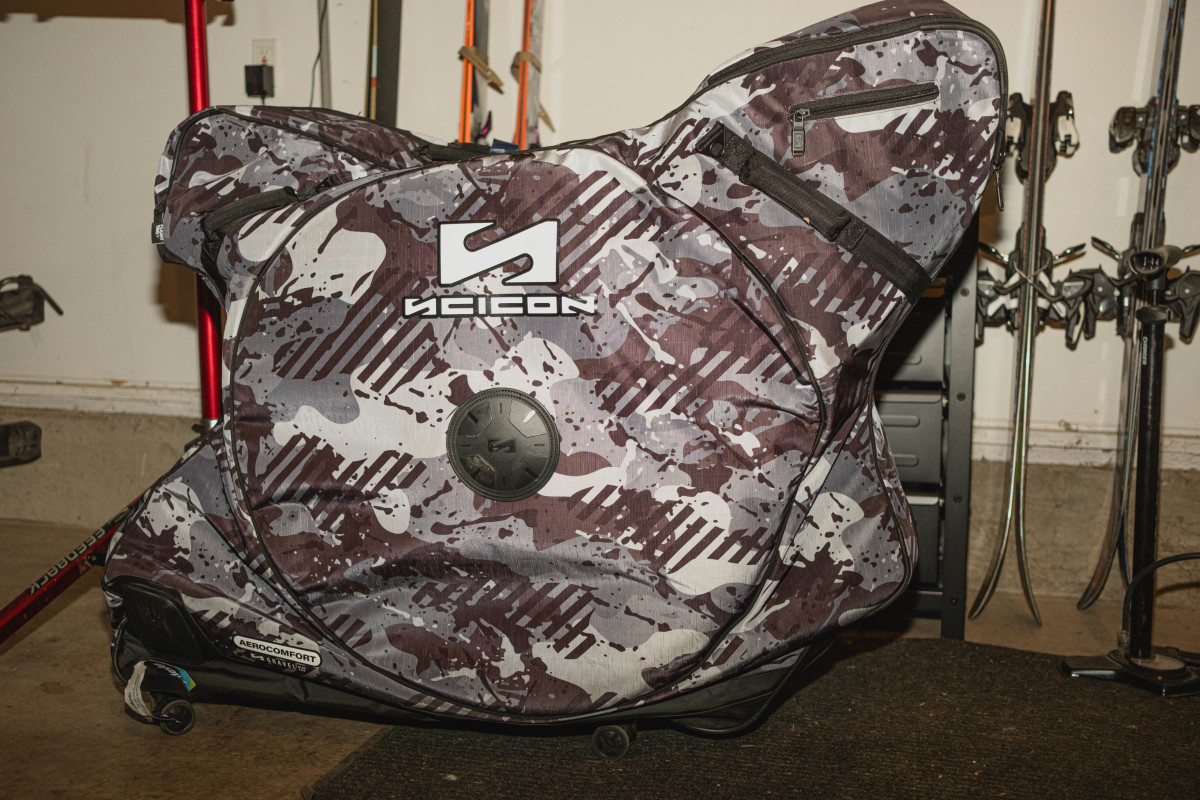
My tendency to do things somewhat last-minute came as a blessing in this case, as Scicon Sports happened to launch their new gravel bike-specific travel bag in early October, just a few weeks ahead of my race. While at first I wondered if a gravel-bike specific bag was really worth the hype, my experience with the Scicon (She-Con) Aerocomfort 3.1 Gravel Bike Travel Bag showed me otherwise.
For reference, the bike I packed into the bag is a 2021 Specialized Diverge Base Carbon in a size 52, with 103mm drop x 70mm reach x 12º flare bars, and 45mm tires.
Overview
Scicon has historically made travel bags that are fairly bike-type specific, but there’s several types under the brand’s Aerocomfort line, with the gravel-specific bag being the latest addition. With the massive rise in popularity of gravel biking and racing, this seems a pretty smart move on the brand’s part. True gravel grinders will know that while you might be able to shove a gravel bike in a road or mtb bike bag, there are certain differences between these bikes that the Aerocomfort Gravel 3.1 ($714) absolutely took into account. Specifically, the bag accommodates wider and flared handlebars, longer wheelbases, and other geometries unique to gravel bikes.
This bag, in particular, is made from a tear-resistant triple-layer fabric with a proprietary 3D Padding protection and TwistZip Double Coil zipper, making it both durable and protective. The bag sits on 4 wheels that roll in any direction, making it super easy to roll through an airport, and it folds nicely and comes with a storage bag for between adventures. The bag itself also weighs under 10kg, so you don’t have to worry about it adding too much weight while trying to skirt oversize baggage fees.
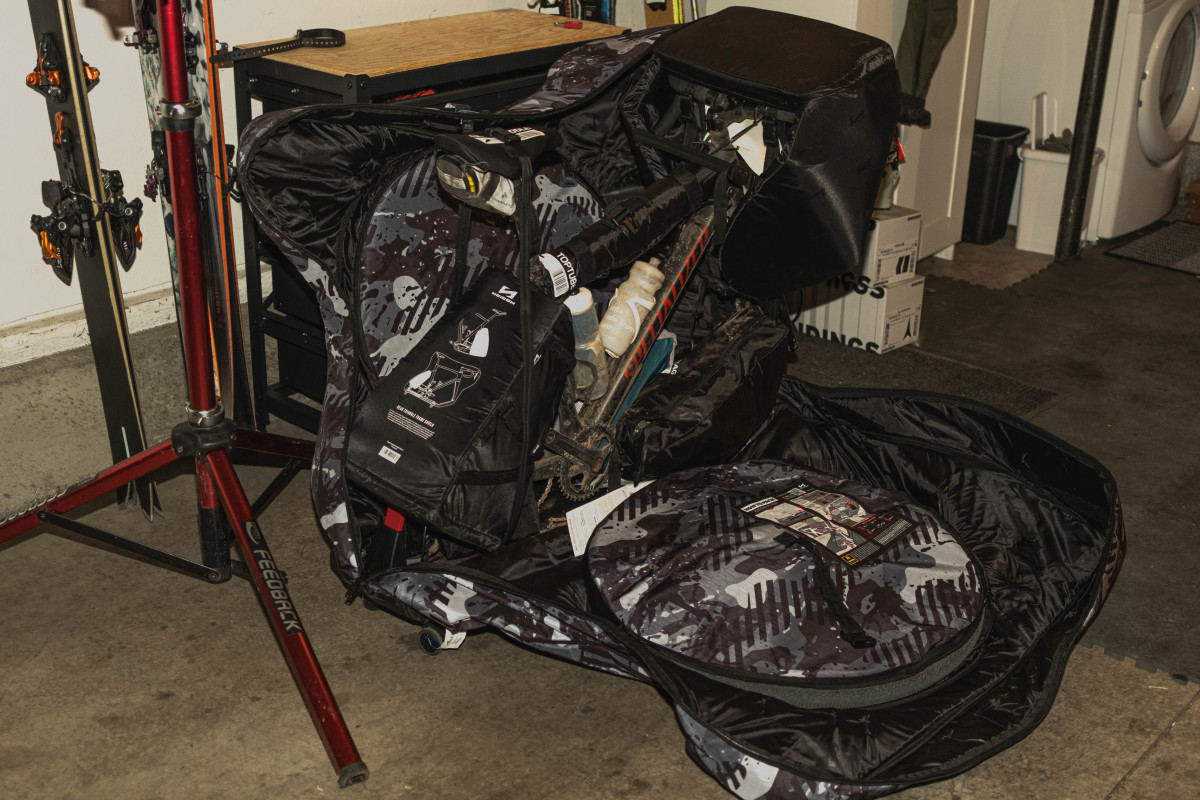
The bag’s internal Frame Defender anchors your bike into the bag and ensures it stays secure and upright. Bikes are mounted to the Frame Defender with Multi-Axle technology that’s compatible with both quick-release systems and 12mm thru axles for disc brakes. Perhaps most importantly, the bag allows you to leave your seat, seat post, derailleur, and handlebars all on and in the same position while in the bag. If you’re a pro athlete traveling with a mechanic or coach, maybe this doesn’t matter too much to you. However, as someone who is very picky about my bike fit, especially when gearing up to ride 100 miles, I was over the moon to not have to adjust my seat or handlebar height or angle at all when packing my bike.
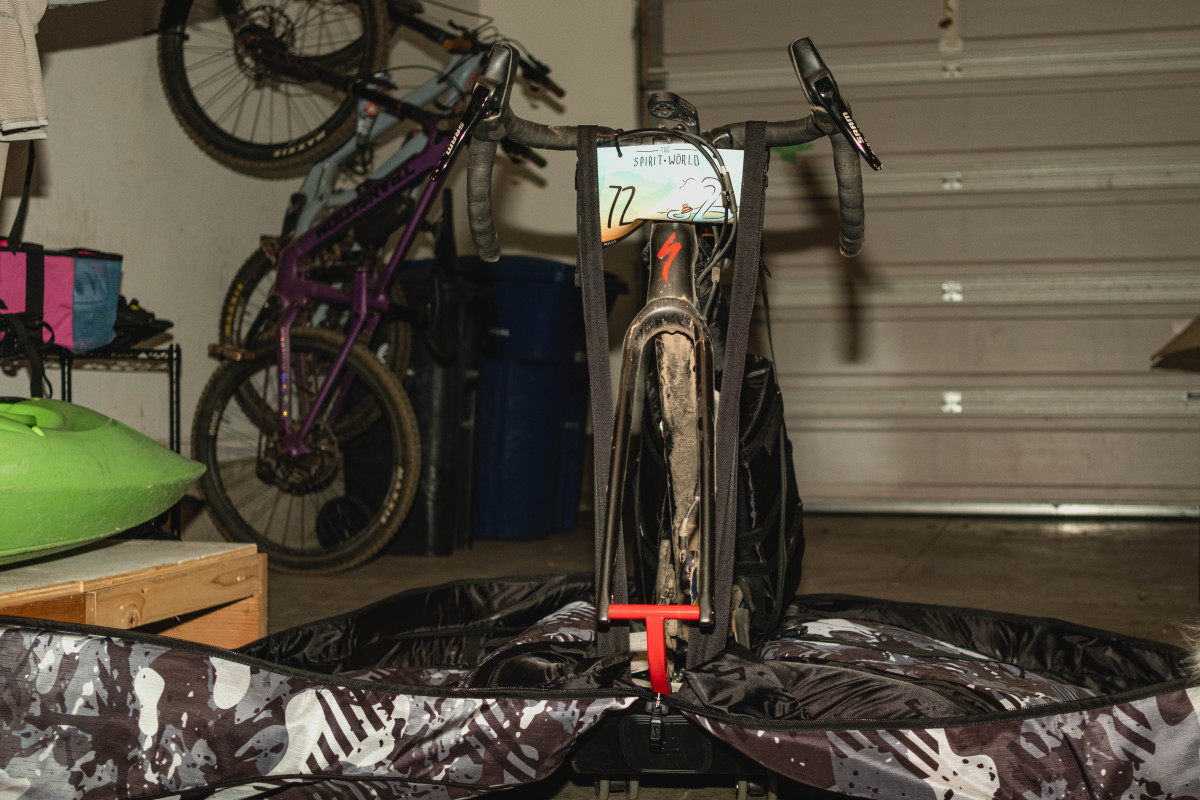
I also used Scicon’s 3.1 Protection kit, which has a handlebar shield, rear triangle shield, and rear derailleur bag, in accordance with the Aerocomfort Gravel bag for a little extra padding and peace of mind.
Setup & Use
Setting up the bag takes a second, mostly just to get the Frame Defender set to the correct length for your wheelbase, but it’s certainly not rocket science. After the initial setup, the bag is shockingly easy to pack and has a number of handy features that you’d never think you needed until suddenly the option is presented to you. A special little pouch just for my pedals? Don’t mind if I do.
While my lovely mechanic friend came to help me pack my bike up and do some last-minute maintenance pre-race and took some of the setup lift off my shoulders, the bag was still unbelievably easy to unpack and re-pack in Arizona. Once your wheelbase is set on the frame, packing your bike is as easy as taking off the wheels and mounting them with thru-axels to the frame, placing your wheels in the handy zippered pouches on the sides of the bag, adding the velcro padding to things like your top-tube and handlebars, and buckling the stability straps that keep the bike in place over it.
If that’s not convincing enough, know that I was able to pack it by myself at 6am the day after biking for more than 9 hours, before I’d had coffee.
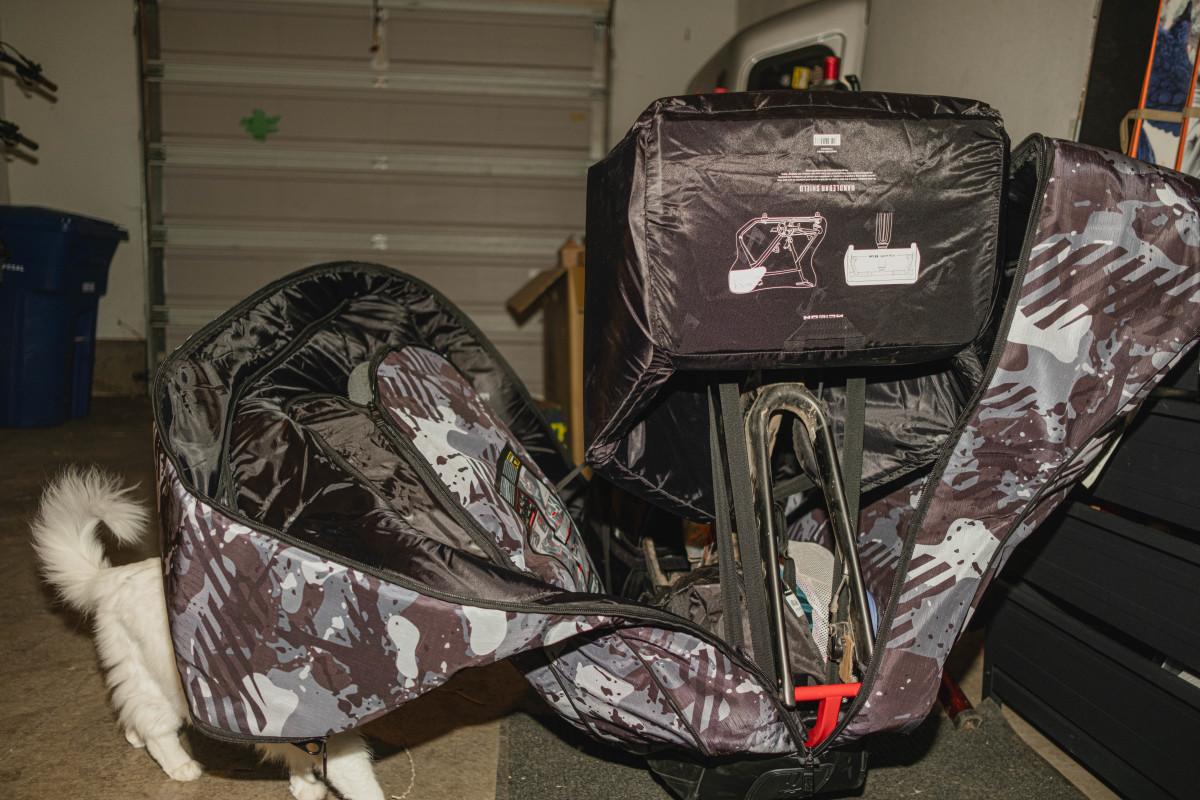
Because I opted to use the additional protection kit, I had a couple extra steps in packing the bike, but not significantly. The handlebar shield sits, well, over the handlebars, and it should be noted that if used, the stability straps need to be buckled before the shield goes on. I run relatively narrow bars on my bike and the shield might not work for super flared bars. However, if it’s not compatible, the bag comes with plenty of its own handlebar padding and the outside of the bag has zippered expandable pockets for the handlebars.
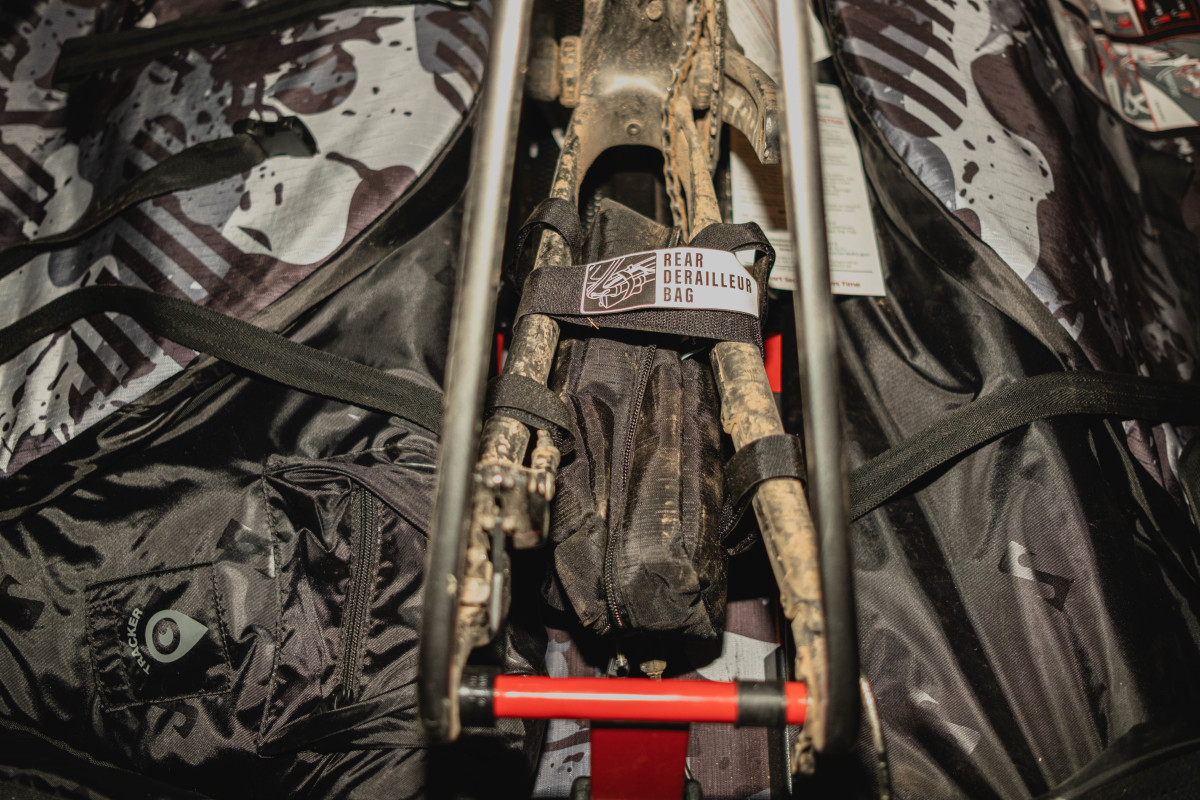
The derailleur bag is another thing that while you might not need it, it certainly added some peace of mind. It mounts with velcro in between the bike’s chainstays, which gives it a little inner house and keeps it safe from the bag being put on its side or otherwise. The rear triangle shield also adds further peace of mind and another layer of protection if you do use that derailleur bag. All of the bag’s frame protection, including the extra kit, is super straightforward to put on and only takes a second. It is an extra $246.75, however, a new derailleur is gonna be more than that if yours breaks in transit. It’s definitely worth evaluating the cost-benefit if the price gives you pause.
The bag also has an aforementioned pouch for pedals as well as a smaller one above it for an AirTag or other luggage tracking device. It comes with a gear bag that fits nicely between the bike’s bottom bracket and fork and fits a helmet, shoes, clothes, and then some. I used this bag, and an extra packing cube I dropped in on top of it to transport basically everything I needed for the race, including nutrition and extra clothes for shakeout rides.
How Well Did it Protect the Bike?
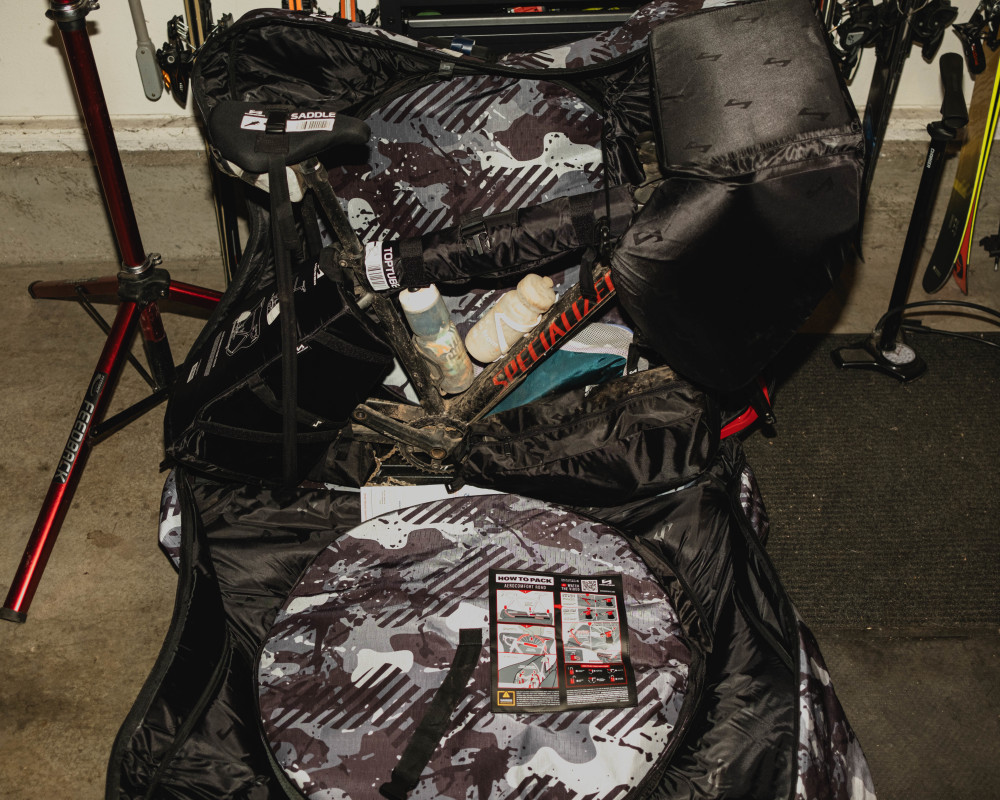
At first glance, a soft padded case gave me a bit of pause. Sure, I’ve crashed my bike into the ground pretty hard without protection and it’s fared better than my body in some cases, but that doesn’t mean I want to take my chances with TSA baggage handling. However, the way the Aerocomfort Gravel Bag is set up means that the bike’s actual frame is placed upright and sturdily in the middle of the bag with a buffer created by the wheel pouches on the sides. Once it was mounted to the Frame Defender, I had no worries about my bike toppling or shifting within the bag. The stability straps added another layer of ease where they threaded through pieces of paddling like on the bike’s top tube and seat.
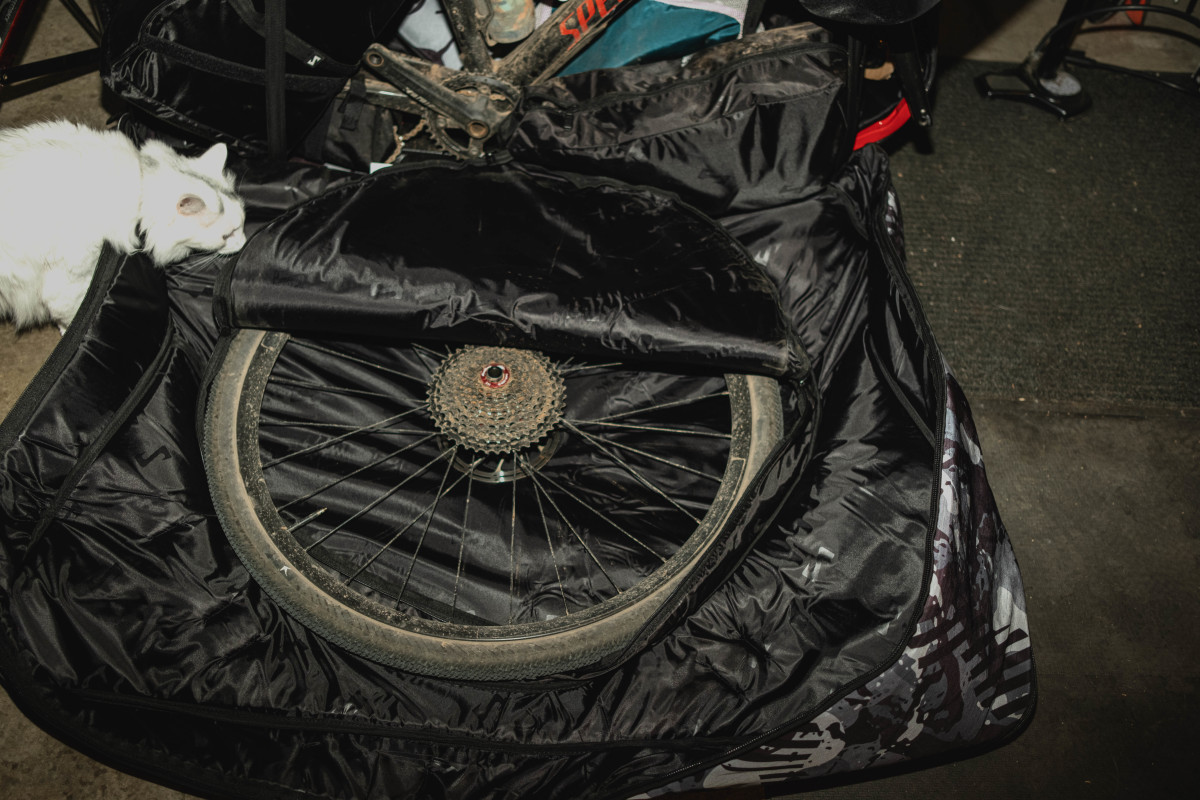
While I wouldn’t have many doubts about the bike’s protection without the Protection kit, (save for maybe the brake levers, but only in the rowdiest of scenarios) I truly feel like the derailleur bag and handlebar/rear triangle shields are so worth it for the extra padding. Once my bike was all packed and zipped, I had little to no worry about it making it to Arizona in one piece. Sure, it was only two flights and a few car rides, but ahead of a long race I’d trained hard for I wanted my bike to arrive in top-tier condition (well, as much as it was when I left…). Further, knowing how the bag performed, I’d have few qualms about flying it internationally or further in this bag and dare I say, even felt inspired to do so, knowing how simple it was to use.
Who's It Best For?
I’ll just be upfront- if you’re an avid gravel biker looking to fly for races, bike packing trips, or whatever other gravel adventures your heart desires with your bike, this bag is worth it. Perhaps if you plan to fly a gravel bike an equal amount as you do a mountain bike, this bag wouldn’t make the most sense for you, as it’s not adaptable for a mountain bike.
However, from a gravel perspective, I can’t stress enough how magnificent it was not to have to adjust any pieces that would change my bike fit. Furthermore, our travel to the race wasn’t exactly straightforward. Our initial flight was cancelled, so we had to load into a friend’s truck with four people and three bikes and go back home for a night before flying out at 6am the next morning. Then, we rented a truck and drove another hour to where the race was and assembled our bikes in a park before we could check into our AirBnB. On the way home after the race, we packed our bikes in a gravel driveway at 6am (before we had caffeine) and then I gave mine to my friend that I was traveling with for her to get home while I flew to another event. It was travel nightmare fuel, and yet as much of a royal pain as flying with a bike could have made it, it wasn’t bad at all.