
- Deven McCoy
- •
- bikemag.com
- •
- July 29, 2025
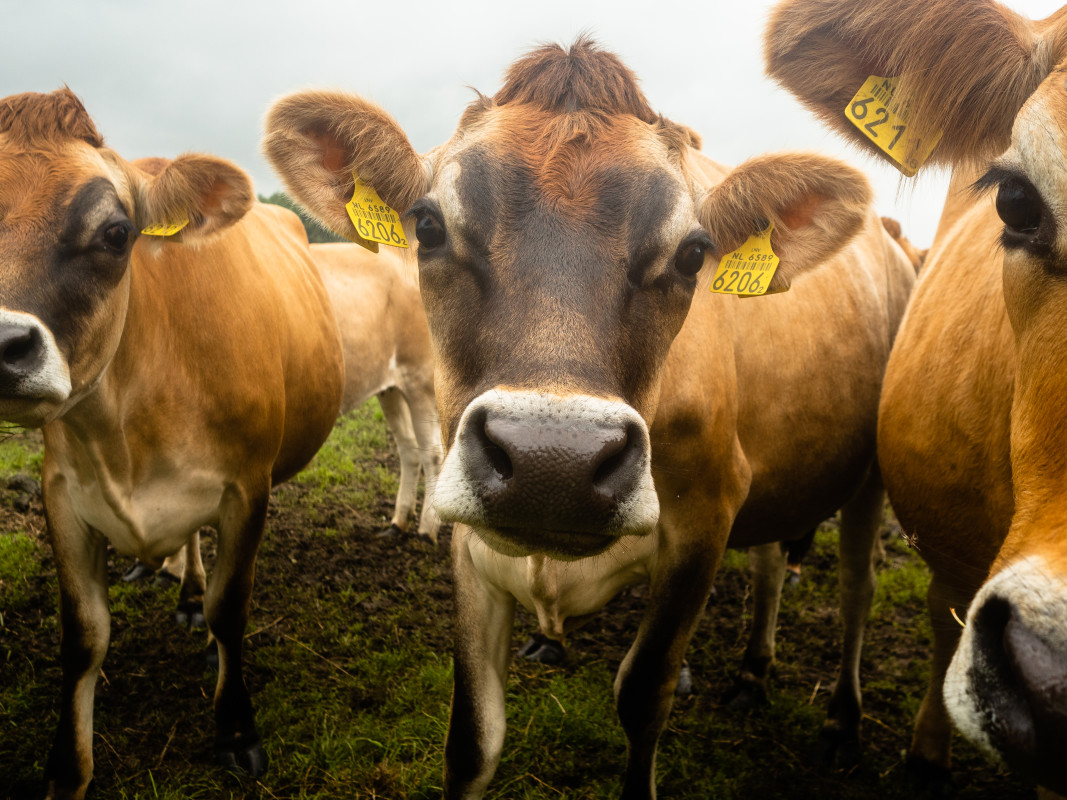
A video that was posted to Instagram on July 26th, 2025, shows a rider colliding with a cow around a blind jump at Bike Park Leogang in Austria, resulting in a fractured wrist for the rider, and the cow is most likely totally fine. This isn’t the first time this has happened either, and a few of the comments on the video detail how frequently such incidents occur.
View the original article to see embedded media.
“Unfortunately, in Leogang, I have experienced several times that the critters are standing in the forest or jumping into it,” said one comment, and many others echo similar statements. Although cattle are technically not allowed in the bike park, this does still happen as the bike park is surrounded by farmland.
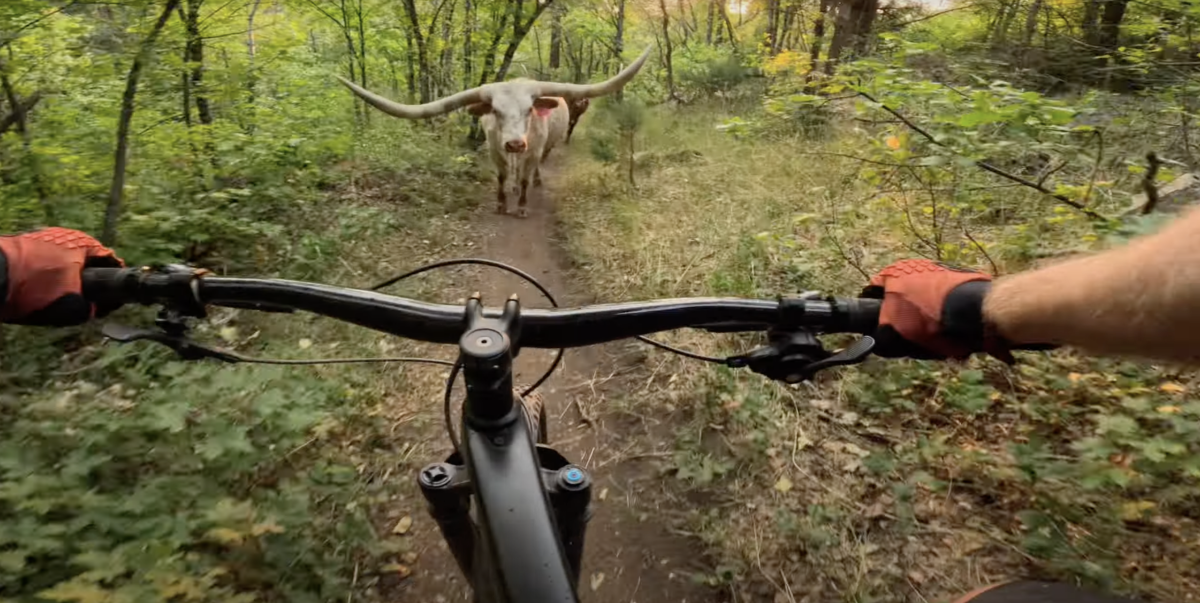
Photo: Jake Vellinga Youtube
Related: The 10 Most Popular MTB Destinations Around the World
Tips for Safely Mountain Biking in Livestock Areas
A scenario like this is also not uncommon in other parts of the world, as public lands and popular riding areas often share space with farms and cattle ranches. There are plenty of viral videos showing mountain bikers' run-ins with cattle and wildlife, resulting in injury to the rider. Mountain biking is inherently dangerous without loose cattle on the trail, but there are some tips and tricks to share the trail with ungulates (hooved animals) safely.
I live in Boise, Idaho, and many of our trails here in the foothills are often shared with cattle. The Southwestern Idaho Mountain Biking Association (SWIMBA) has a dedicated section on riding near livestock.
While not everyone will benefit from these tips, it's still something to be aware of, because you never know when you'll need to use this knowledge.
Related: Mountain Biker Runs Into Massive Longhorn in Viral Clip
Before the Ride
- Plan your route: Check trail maps or with land managers to see if the trail goes through grazing areas. Look for signage about etiquette and potential hazards.
- Ride with a bell: The constant ringing will alert cows to your presence, giving them time to move calmly.
On the Trail
- Yield the right of way: Cows are much bigger and less maneuverable than you. Give them ample space to graze and move.
- Slow down and be predictable: Avoid sudden movements or loud noises that might spook the cows.
- Maintain a safe distance: Don’t crowd the cows. Aim for at least 100 feet if possible.
- Communicate: If you need to pass by a herd, call out calmly to let them know you’re there.
- Be aware of mothers with calves: Cows are protective of their young. Give them even more space and avoid getting between them.
- Don’t chase livestock: If a cow seems curious, don’t try to get closer or interact with it.
If a Cow Charges
- Stay calm: Sudden movements or panicking will likely make the situation worse.
- Discourage without provoking: Yell or wave your arms to create a barrier but don’t threaten the cow directly.
- Find a safe escape route: Look for a way to calmly get away from the cow, like behind a tree or a large rock.
Remember: Always be respectful of the land and the animals. By following these tips, you can enjoy a safe and enjoyable ride while sharing the trail with our bovine friends.
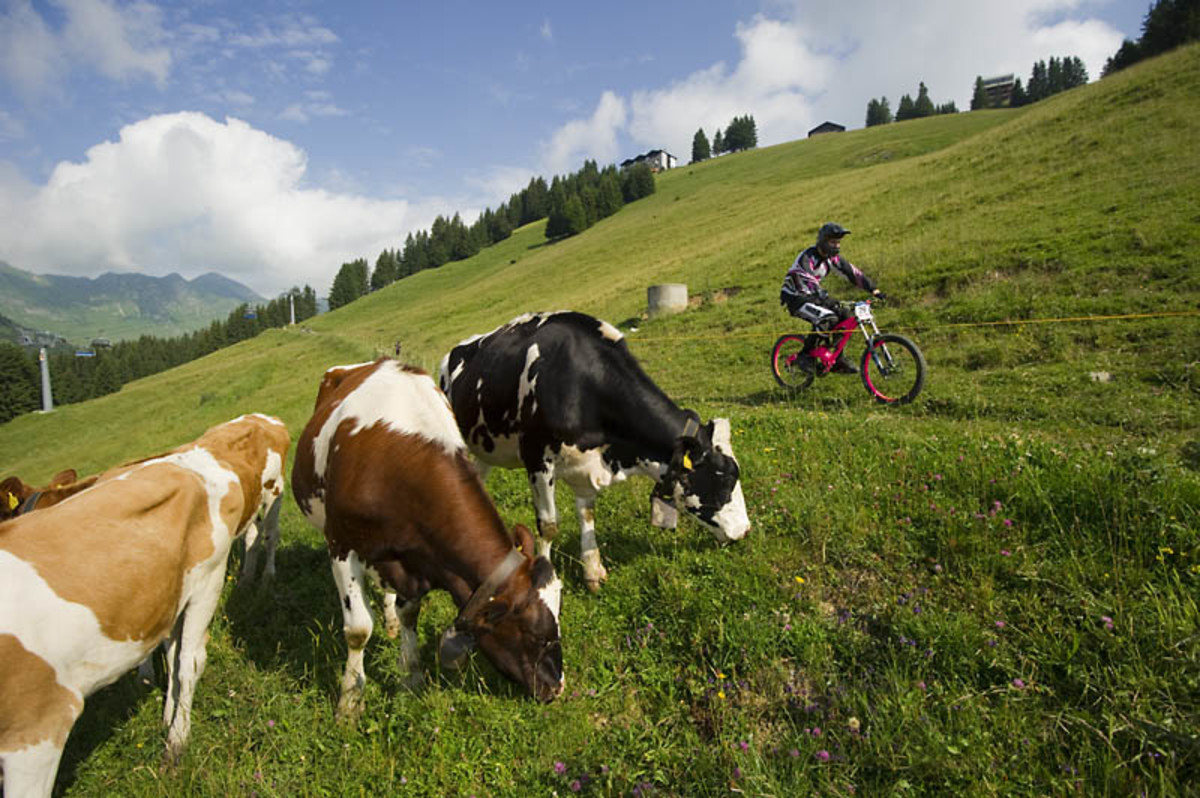
Photo: BIKE
From what I've seen, cows are usually quite gentle. If you approach them calmly and let them know you're there, they'll often stay relaxed. Making sure you're visible in their line of sight helps too—they tend to move aside willingly. Of course, there are always exceptions, so it’s wise to treat them with respect and be ready to step back quickly if needed.
The safest way to pass cows on your bike is to slow down, approach gently, and pass quietly to avoid startling them. You might also try letting them know you're there with a bit of personification, as most cattle are accustomed to human interaction and a friendly voice might be recognizable: "Sorry, cow, I'm just squeezing by."
Another thing to consider is that cows with calves can be quite protective of their calves. Cows might charge if they sense something threatening, so it's important to stay cautious. Bulls are less commonly seen in herds on trails, but they can sometimes act unpredictably and aggressively if cows and calves are nearby, so it's best to keep a safe distance and show them plenty of respect.
Herding Dogs
Although cows and livestock aren’t something to be super afraid of while riding. It is still smart to be aware while riding in an area where you could encounter them and know how to handle the situation properly if you do come head to head with 1,200 lbs of bovine on the trail.
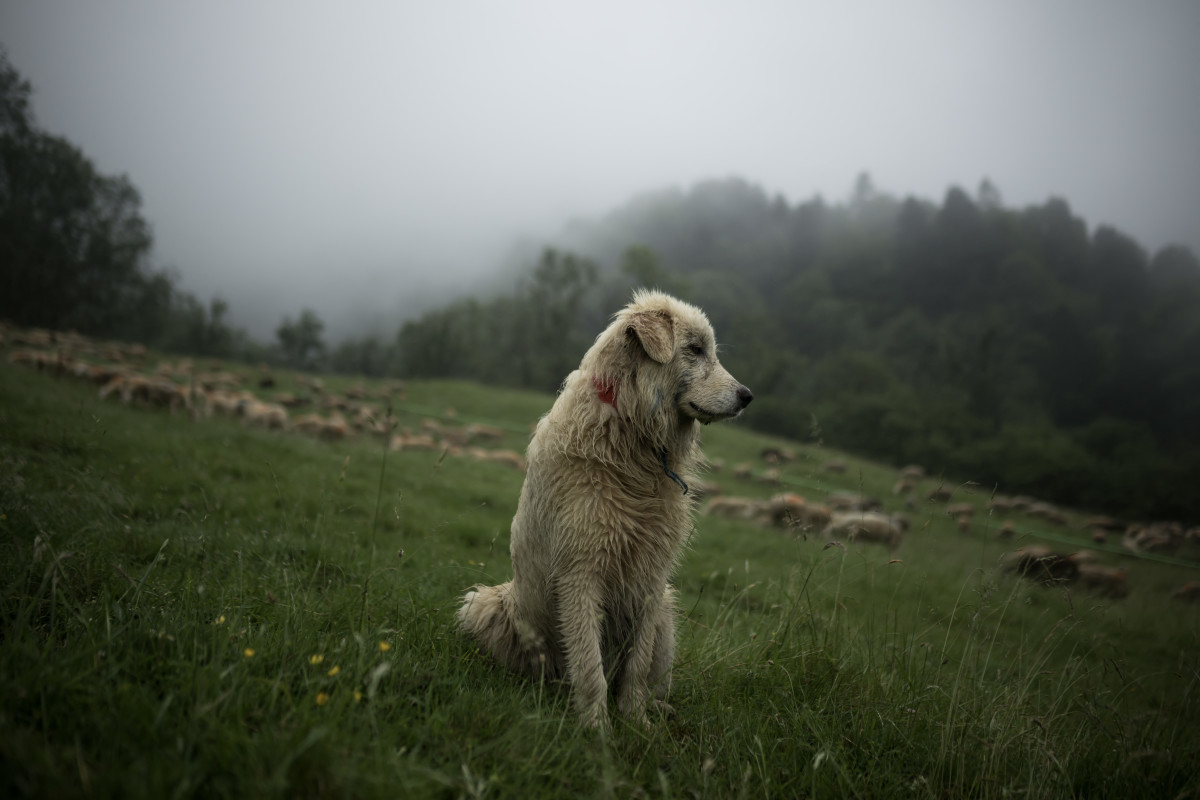
If you are riding in a wilderness or public land area, there could be herding animals nearby, and in some parts of Europe, it's common for herds of cattle to be accompanied by herding dogs. Herding dogs could be aggressive as they are somewhat responsible for the safety of the herd, and could perceive a mountain biker as a threat.