
- Chris Dodds
- •
- surfer.com
- •
- January 14, 2026
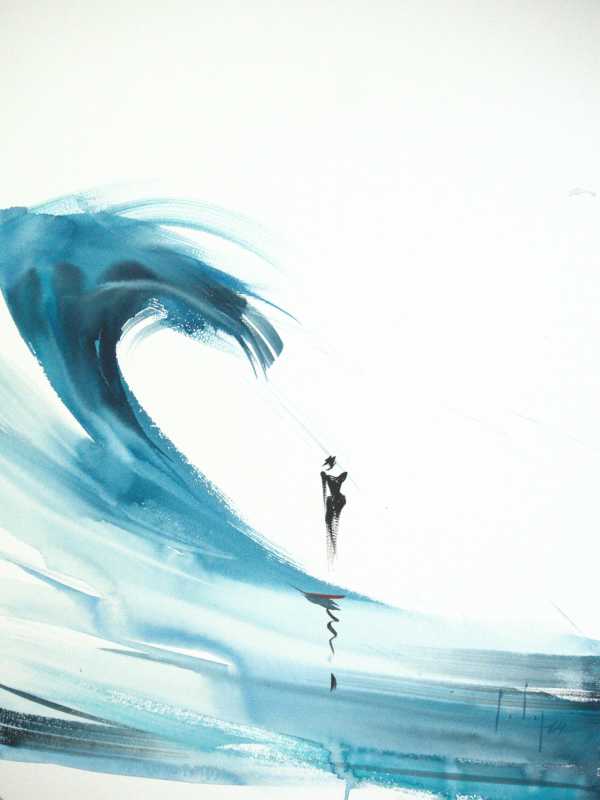
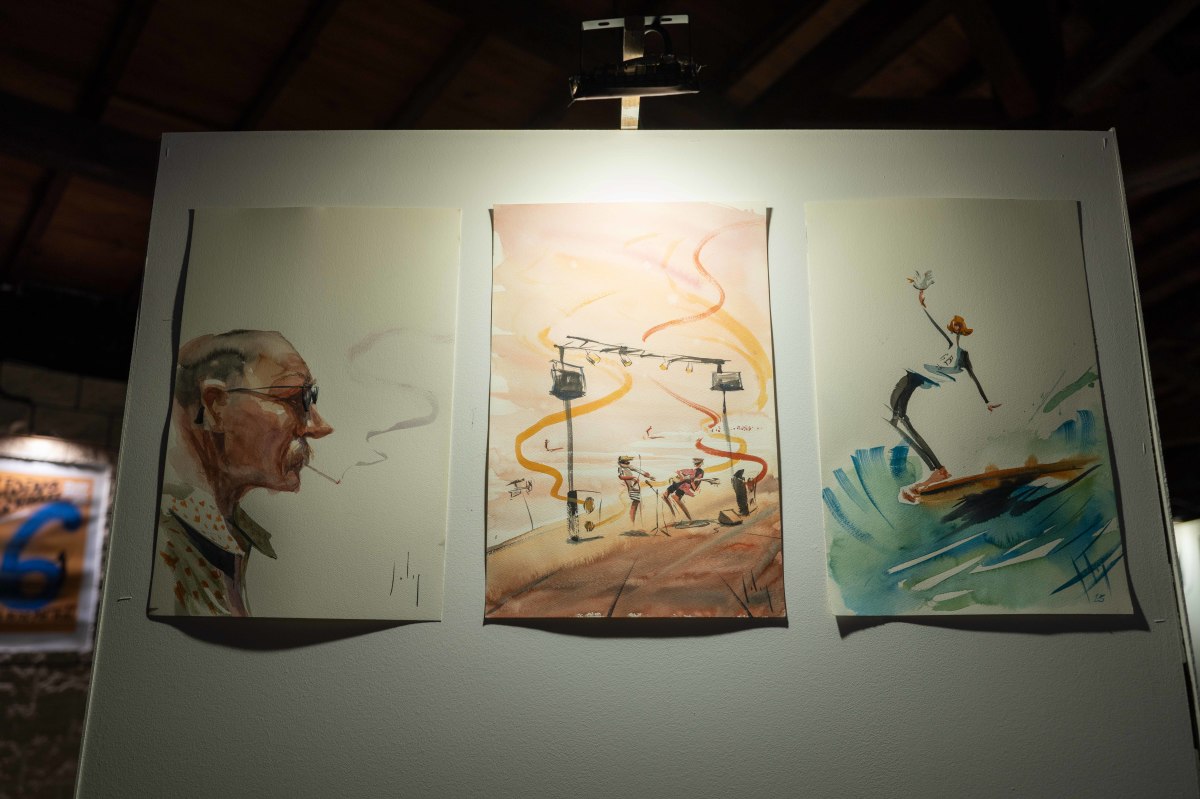
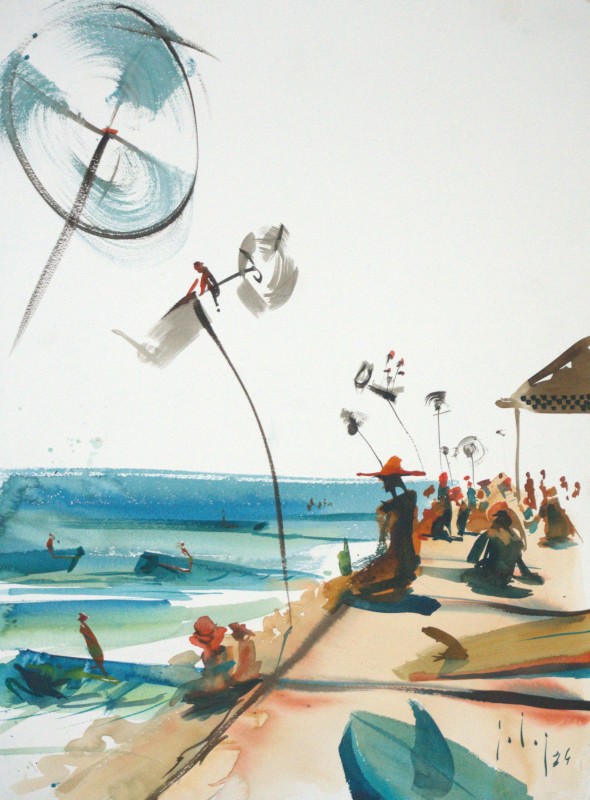
In the pantheon of art forms and painting styles, there's one style that few can master due to its deceptive difficulty--watercolor. That's why when I first saw the work of Johny Vieira, at the Gliding Barnacles surf-art-and music festival in Portugal, it shocked me to joy and profound appreciation.
Johny's work is a nimble dance with the delicate medium, one where there is very little room for error. Unlike oils or acrylics, watercolor is transparent and unforgiving. As soon as the brush hits the paper, it stains quickly and permanently, one small mistake can derail an entire painting. His surf-ified landscapes and subjects all reflect a mastery of touch, an ability to control the fluid nature of water while considering the other variables like humidity, paper texture, and timing.
In many ways, the medium is much like surfing itself; many can dabble, few can truly dazzle. The artist must always be thinking ahead, carefully planning where they will leave the light spaces and where they must bring out the shadows. Think of it like reading a wave, if you go high when you should have gone low, well, there goes the wave. Tchau tchau amigo
Chris Dodds
I caught up with Johny to learn more of his life story and to share his art with you. For those interested in learning from him, he teaches two surf & art retreats in his hometown of Praia de Santa Cruz, in partnership with the Cliff Surf House. He also organizes workshops and private lessons, for more information, please check out his website here.
Interview with Johny Vieira
Johny Vieira
Where were you born and raised and where feels the most like "home" today?
My parents, both Portuguese, emigrated to Switzerland — that’s where I was born. Lucky me, when I was 9 they decided to come back to Portugal, to Praia de Santa Cruz, a little village on the west coast, from where my father is originally from. It’s there that I have been living most of my life, where I have my friends and family, so this is definitely the place I call home.
When did you get into art and when did you get into surfing and what do you love about them?
I got into surfing 25 years ago, when I was around 13, the typical kids playing on the foam with styrofoam boogie boards. Then we started figuring it out by ourselves.
About art, at school I used to enjoy drawing comics, making fun of the school staff, other random drawings, and that was it. Then maybe around the age of 20, I had an idea of making a wave coming out of a picture frame, a sculpture made of plaster. This is when I really started to get into art.
As with surfing, art can catch you in a flow, a meditative state where you are just there. I love that.
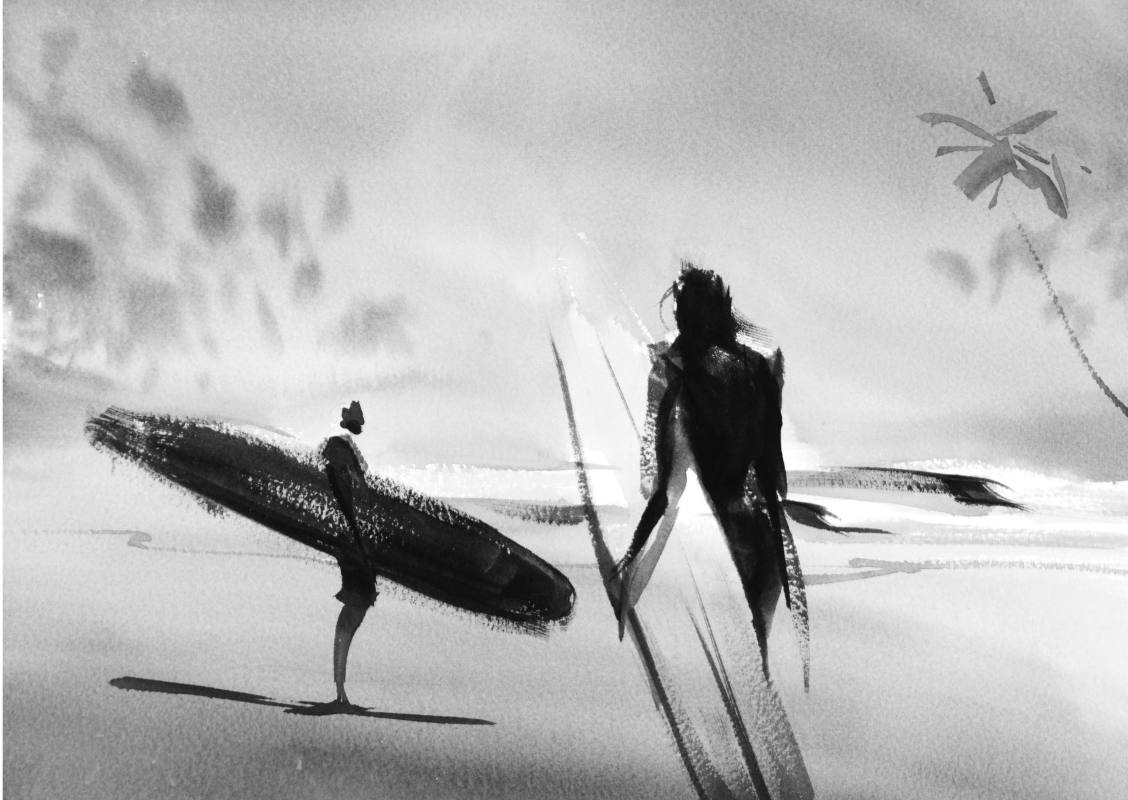
There are so many things that I love about surfing, and it’s all those things together that make it special: the state of mind, the clearing your thoughts, that energy boost for the day after surfing, the fellow friends we make along the way, the inconsistency and scarcity that make you search for waves and value them when it’s pumping, the dance with nature, how small the ocean can make us feel, you know the feeling.
Johny Vieira
How did things evolve from that first moment of wanting to make a wave sculpture?
So, after making wave sculptures and surf trophies for championships for a few years, I got very tired of it. It was getting too repetitive, and something I don’t allow myself is to keep doing something I’m not excited about. So I went to learn painting and drawing in a technical school. There the references were not surfing, but at the beginning you just want to learn techniques and different media, the mind is too occupied with that. Then the subject you want to paint is almost irrelevant at the early stage.
But then very soon surf was my theme, by nature. You, as a writer, probably understand me — you want to write about things you have feelings or curiosity for, right? At the beginning I used to paint from surf photographers and surf painters’ references to get technically more skilled, and once my mind was not so occupied with the technical part, I could finally start to explore painting and try new things, coming from inside and not from references.
Yeah, I totally understand. As for using watercolor being very difficult medium, tell me about your connection with that style?
Indeed, watercolor is a difficult medium, mostly because you cannot paint over it, not like acrylic or oil. At the same time, there are moments where you need to paint fast. That’s why old painters used to use watercolor just for studies — only later watercolor started to be recognized as a “serious” art medium too. I like it because of the water, the effects that water, pigment, and gravity can create are very unique to this technique. I also felt it could be a good challenge to bring a more modern approach to it; I didn’t want to paint granny watercolor style. Another reason is that it requires less equipment, it’s easy to transport and paint outside. Since I live in my mobile home, this is a plus for me.