- Jed Smith
- •
- surfer.com
- •
- December 1, 2025
Russ Bierke is as rare a talent as the surfing world has ever seen. The son of a renowned big wave surfer and shaper in Kirk Bierke, Russ has been putting full-grown men to shame in waves of consequence since he was a nine-year-old with a GoPro in his mouth. For anyone who watched him do his thing as a child, as I did, it is unsurprising to see him now setting the standard for what waves can be paddled of the hollow variety (alongside Nathan Florence and a handful of others). We talked to Russ about the risk involved in riding slabbing, boiling, stepped out mutants; some of the injuries he’s seen and suffered; how having Noa Deane as a muse has helped him up his game; what boards his dad is making for him, and plenty more.
SURFER: When your films come out, everyone in my network, in my world, is talking about them. The reaction to a new Russ Bierke edit is kind of unparalleled. Everyone just wants to see what mutants you've paddled, where you've raised the bar to. Do you get a sense that your films are setting the bar for heavy water, traditional paddle surfing?
Russell Bierke: Yeah, it's pretty cool. It's cool to hear that for sure, it means a lot. It's something that I've always wanted to push and yeah, to get that sort of feedback means a lot to me.
The slab at the start of this thing: where to start! It's all going so well at the start when you're whipping in and even when you set your line, you get the line perfect. Even the shape of the wave is pretty perfect and makeable in a lot of ways, but it just pulls so much water off the reef the water tension is so intense on that thing that you can't deal with the G-forces. What are your thoughts on it?
Yeah, I've watched it quite a few times, trying to figure out how I could approach it. Yeah, I don't know. Just that boil was giving everyone grief. That whole swell, it was like you'd hit a pothole and stop. And I feel like that wave was as big as any. The way the base of the wave was almost draining down into the barrel before it became the wall, so you got to the bottom of it, and it was like I was riding uphill and just lost all my speed. I was trying to go straight and ride out of it, and I felt like I just sat there in the same spot while the wave grew and doubled up around me. And it just ended up pulling me too high, to where I had no speed to continue the line. But I mean, maybe if I had straps on my board, I might've been able to set a bit more of a line across the wave. But yeah, I'm not too sure really. And then the straps would have been a bit of a nightmare on a bunch of other waves too, because you're in such flat water and kind of trying to, I don't know, I'm just not a huge fan of them. So yeah, it's a hard one.
Talk us through that entire session.
It was like a pretty rare swell. That wave's been surfed quite a few times now, but always on super rare days. And it's always been insane, and then that swell, it must've just been the direction, (it was) hitting it perfect. And yeah, we had one day that was huge and maybe too much period, and it was collapsing in the channel a lot on the huge ones. And then the next morning, we didn't think it would be big enough, and we went out a few waves and I was pretty buggered from the day before already. I whipped a few mates in all day, and then my mate Moose was like, you might as well get a couple. And so I got two that were kind of fun. And then that was like the third wave that came through. That was just like, I don't know, mutant compared to everything else coming through that day. It was pretty funny. One of the bigger waves of the whole swell, and it came through midday on the second day, when it was just dying and I feel like that almost gave a false sense of security that it wasn't that crazy like because it was the day it was kind of mellow. Not too many crazy things are coming through and then it hit the reef and as soon as I was on it, it was pretty nuts and a false sense of security because we're all going to get sent over the reef into deep water; it’s like kind of mushroom rock bommie. So it was kind of like, everyone was pulling in, so many people eating shit all day, but you were getting sent deep, into dead water. But yeah, that one I didn't quite hit the deep end.
Talk us through the wipeout.
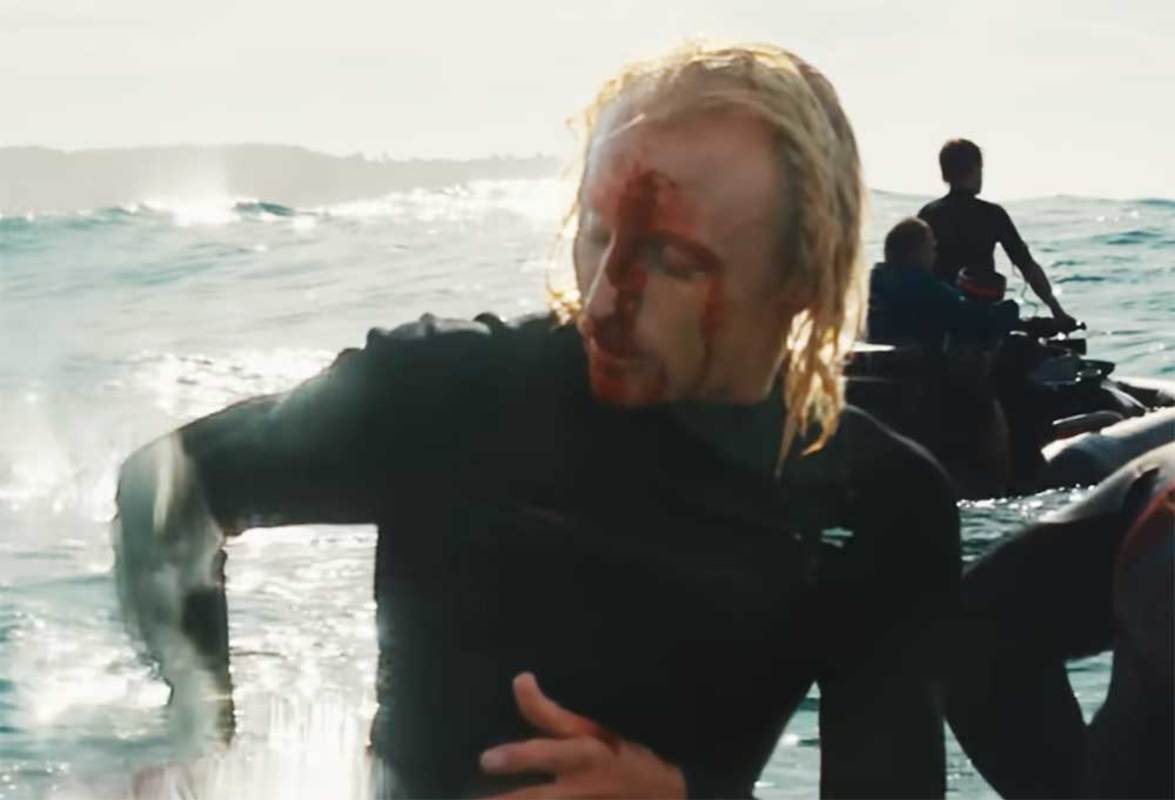
It was pretty quick. Once I knew I was getting sucked up the face and didn't have enough speed to come out of the barrel, you just want to hold on until that foam ball or shockwave hits you. If you can make it there, you normally end up in that trench where the lip parts and you can get an easy out of the wave or it'll maybe pull you over into the deep bit rather than if you're in the lip, that's where it's the dangerous part that's going to drive you to the bottom. I almost got there and I ended up actually diving into that trench, but the lip had blown so much water off the reef it was just dry. So I ended up landing on both my hands trying to absorb it. And then my head went straight through my hands and my face planted on the reef. And it was violent, but my mate was like, you were up in two seconds. I pretty much bounced off the reef and then was on top of the water. I didn't get a hold down at all. That's when he thought he knew that I'd hit the bottom pretty good cause it was just too quick.
Related: Invitees For 2025/26 Eddie Aikau Big Wave Invitational Unveiled
And the wipeout, did you have a bad concussion?
I got lucky in the concussion sense. I ended up breaking my nose and had one cut that was kind of deep and the hospital was so crowded, I got sent up for scans and they said that was all good. And then went back to Ulladulla to get stitches because it was so packed, and they didn't see that there was a little bit of reef in the cut. So I got stitches out a week later and then all of a sudden it got crazy infected in this cut. And I had to go back into surgery two weeks later and get them to scrape a little bit of seaweed or something out of the nose. Apart from that, it was all pretty quick recovery. After the surgery with the cut, I was out of the water for a month total, but I had a pretty tender nose for a while.
The slo-mo backdoor knife in this film is a pure feat of Bierke engineering and performance. Your dad's board gets you down it and you have so much faith in that equipment, you've been riding it since birth, that you managed to pull off one of the wildest paddle tubes I've ever seen. Talk us through that session and that wave.
It was funny, it was barely breaking that day. We were watching it, and we're like, I guess we'll just go out, there might be a little pulse. I was down there with Noa Deane and (pro bodyboarder) Chris James. And it was just the three of us out the most of day. It never feels that big when it's coming in and then you get to your feet and the bottom drops out like crazy. That one came in pretty doubled up and I was under it and behind it and thought I was fine until I got to my feet and was like, ‘Oh shit,’ the bottom dropped out so quickly and had those ribs and I was too committed to jump to the left or do anything else or pull off so I just had to try and get down there. It felt like I was so impossibly deep and I was like, ‘If I can get down it and get to that little trench, shockwave thing - just felt like I was taken off on a close out when I got to my feet, then somehow you just go so quick through that wave. As soon as I got down it, it just slingshot me through the whole thing. It was a pretty crazy feeling take off. It felt like I was about to fall the whole time.
It had pin drop written all over it, but you managed to pull it, and a lot of credit has got to go to your dad's boards. They're glassed very heavily and kind of suck you down into the trough once you've committed to a wave.
Yeah, for sure. Yeah, I do love that little bit of extra weight on waves like that just to power through all the little ribs and everything. You still have all the speed you need on those waves. So yeah, just something that's solid and you can maneuver at speed. It's pretty good.
And tell us a bit about the equipment you and your dad have been working on and how it varies from wave to wave.
I do have a few boards for specific waves, but for each size and style of wave, we have one model. That board I was riding on that late drop was the same board that I was riding on the big left at the start (of the film). That's just the slab board I ride if it's really hollow and thick and dry up the face. I try not to change up boards per wave too much, just something that feels solid under my feet, and I know what it will do because there are so many similarities between waves and the way you can surf, but I feel like having a board you know back to front is key for me.
And what are some of the design features in your go-to boards?
Those slab boards are kind of wide and maybe a little bit flat through the chest. And then got a pretty pulled-in, really thin, knifey tail and pretty soft on the rails, not too much like edge or grip. Cause when you're going that fast, you've got all the grip you need. They're definitely not high-performance boards. Just something user-friendly. When you're surfing those waves, if you do slip up on a little rib, you're going to catch your rail. So quite a bit of kick through the top of the nose, which is key when you end up in those real corner-y ways.
I can't think of too many examples of a father and son shaping and surfing duo that's gone to this level of performance and testing of his equipment.
Yeah, that's cool. And a lot of our boards, especially in bigger boards, aren't massive boats that you could catch anything on. That's probably the main design key for me. It's something that once you're on the wave, you'll be able to surf it properly, which might mean a bit steeper takeoff. I've tried surfing bigger boards, but it just feels like I'm out of control most of the time. But if you can actually position yourself and get on one with a quite knife-y thinner board, it just makes the rest of the wave so much easier.
Related: Russell Bierke Does it Again: Inside the Mind of the World’s Most Focused Slab Surfer
So that's more for those 10-foot-plus, kind of Irish, bigger style waves that you're surfing?
Yeah, like a Mullaghomre or something, not riding big boats but something you can kind of negotiate.
It’s such a fine line between having the kind of width around the chest to get the early entry and the good paddle power. It's a full ratio of paddle power and volume to refinement once you're on the wave, and the surfer's skill level and their ability to manage positioning and drops.
For sure, yeah. Like there are ways to keep the glide and everything to where it'll pick the wave up really nice on a thin, knife-y board. But then it comes down to positioning beforehand because they don't paddle from A to B as well. With the right rocker and everything, you can catch swell lines just as easily with less volume as long as you have the right rocker layout.
You've seen some hectic injuries go down during filming for sessions, including your good mate, Tom Lowe, at Teahupoo recently. What's it like watching someone nearly die during a session and how does that affect you going forward?
It's definitely a fair reality check for sure. Going into those waves, you know that can happen and you try to have measures put in place in order to help if something like that does happen to where you kind of prepared. But yeah, it a lot of times we'll put an end to the session. It just feels weird to keep pushing it after that's happened. But yeah, I'm stoked, Lowey made a full recovery.
And you've had your own brush with death in the Southern Ocean of Australia. This is going back quite a while. I think you were pretty much a grom and Kelly Slater was one of the people who saved your life that day. Did that affect you moving forward?
It did a little bit. It can happen on a crazy, psycho wave, but the wave I pulled into that day - we were going in, it was on the very end section of an 8-foot wave on a day with 15 to 20-foot waves. I just pulled into a tiny little pinch, and if you can get that done up on a wave like that when you've just eaten shit on a 20-footer before, it does come down to randomness a lot. A lot of the worst injuries we've seen have been on a weird little insider on a heavy day. Or even on a place that's not super gnarly. It comes down to like luck a lot of the time. But it is good to have safety measures in place and it definitely makes you feel a bit more confident if you have a rescue team on a ski in the channel just in case something like that was to happen.
Related: 5 Ways to Not Die at Maverick’s
I don't know how you safeguard against that when the small ones are the ones that are almost more likely to hurt you.
A lot of my injuries, like breaking my feet or whatever else, had been on, like, I broke my foot on a 4-footer at Cloudy the day after surfing back ledge. Just weird stuff like that. When I got knocked out down south years ago, it was my board hit me under the chin. And I think, yeah, maybe the year before (south coast charger, Scott Dennis) Whip got hit under his chin by his board in the shore break and fully broke his jaw. There was no one around. If that knocked him out, then it would have been horrible. That could happen on a two-foot shorey sort of thing. It's weird to think about. Obviously, the odds are high when you push it in any way.
You finally got the wave you're looking for at Mullaghmore. What makes that wave so challenging and what makes this wave in particular so special?
I’ve been cursed with that joint. Just going there for years, it is like the dream wave, but it is so hard to surf and backside especially, just to try and pick that right line through the boils and not get sucked too high or not get clipped or something. A lot of what makes it hard is how variable it is and the weather there is brutal. You'll go for the most perfect day on paper and it'll be too boil-y, steppy and too fast or, it's just incredibly hard to get one of those days that's got a lot of those really good waves. That's definitely a challenge. And then, yeah, once you're in the lineup, picking the right waves becomes pretty tricky too. Everything about it is hard.
And talk us through this one.
I was over there with Noa (Deane), and we had three days of it and each day was so different. The first day was glassy and clean, but so deadly and steppy. I think (Tom) Lowey and Noah Lane both got hurt that day and we kind of wrapped up. Then we had a second day that was pretty perfect, and we all got a bunch of good waves. And then the third day, it was really windy and kind of average, and then this one wave came through that had a bit more size than the rest. It felt like I was just locked in with the spit and spray and the wave bottoming out the whole way. And then, yeah, it ended up spitting me out at the end of it. It was funny. Like when I first got it, it kind of just felt like one of the other waves. I think it was so windy and so much spray, I didn't really know what was actually going on. Just trying to hang on for your life on that thing.
And Noah Lane - was that the session where he fractured his skull or had a really bad head injury?
I think he broke his pelvis, as well. Just slammed the reef. It was a super low tide, and Mully, a lot of times, it'll send you into deep water where your ears are hurting and it's almost like a Mavericks hold down. A hold down where it just takes you off a waterfall and you end up going super deep. But when it's super low like that, it breaks in front of the reef a little bit and crew have hit the bottom pretty hard. The tide got too low that day and he ended up just falling on fair bit of a nugget and it just slammed him crazy hard.
Wow, that's heavy. How did you guys manage that injury?
I was out the back, and it's such a long wave and so hard to know what's going on down the line. Thankfully, the Irish crew are super onto that. That's one of the places that’s a real go-to with safety. They’ve always got at least one guy in the channel on a designated ski to do pickups for injuries and everything. A few other guys got him into the harbor. It is a pretty safe wave because there is a harbor right there, you're pretty close to help as opposed to some other places. And was actually still in the lineup and didn't really know what was going on. And then Connor McGuire came up on a ski and he's like, ‘Noah has just been hurt, every wave is going pretty dry. I would recommend sitting it out for a good hour or so over the tide,’ which we ended up doing. We were out of the bag and the tide changes so quickly there on the big swells, you'll catch a wave and it'll be fine. And then half an hour later, the tide's way too low and it's dry and you don't know out the back. So it was good that they're onto it. We got the heads up and Noa (Deane) and I just ended up sitting in the channel for an hour watching the craziest mutant things run down the reef.
I understand you and Noa have been surfing a bunch together. What's it like surfing with him?
Yeah, it's epic. We've had a few good trips this year. He's living on the South Coast now and kind of been mates for quite a while. But yeah, we've always talked about chasing waves, and it hasn't really lined up that much until this year. He's been a good travel partner. We've had a lot of fun waves and it's epic surfing with him. Just his read on the ocean and he’s always keen to milk every last drop of it. Even if it's kind of average but there might be the odd one, some crew might not be that motivated, but he's always just like, ‘We should go out, shouldn't we?’ And then once he's out there, he just doesn't come in for hours. So it's pretty motivating for sure.
You talk about your love of imperfect, slabbing waves in Inner Mechanics. What is it that really draws you to them?
It's the fact that no two waves are the same, and then if you do get something weird like a weird little double up or something on those waves, they can make something incredible that won't happen on a perfect Indo reef or something like that. It never really gets boring in those kinds of waves.
And what can we expect next from Russ Bierke?
Just gonna keep chasing waves. And I have always talked about making a longer form doco, and we're hoping that’s the next goal to try and get a full-length film going because we've done a lot of short 10 or 15-minute edits now. You'll see if we can pull it off.