
- Ben Mondy
- •
- surfer.com
- •
- November 4, 2025
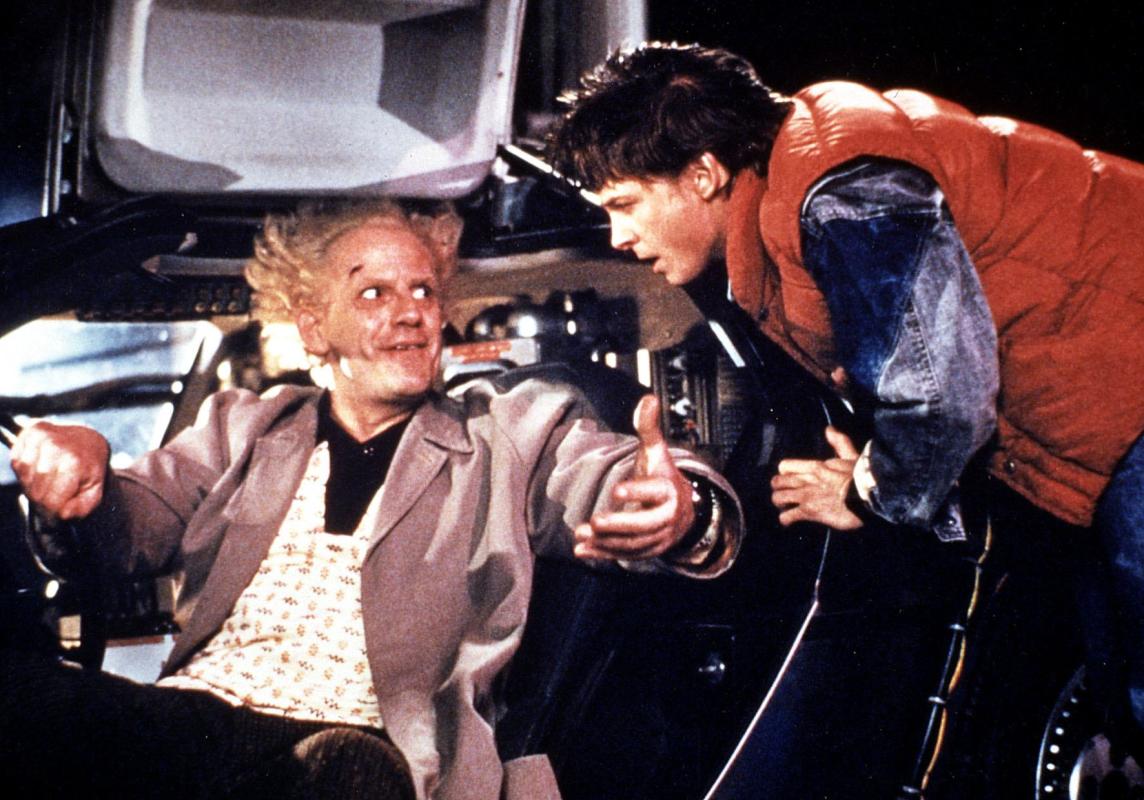
“Since when can weathermen predict the weather, let alone the future?” That was Marty McFly in Back To The Future. In the film, he was stuck in 1955, so maybe he had a point. Surf forecasting is, well, all about forecasting. It’s the future. A crystal ball that every surfer worth their salt has in their arsenal. As technology and science have improved, so have the predictions. It’s not always right, after all, this is the weather we are dealing with, but it’s never been better. And it's getting better every day.
In such a forward-thinking mode, you’d think that looking back might not be useful. How can "hindcasting," as it's known in the trade, which is essentially running a forecast in reverse, be of any use to anyone? If the old phrase of “You should have been here yesterday” is the most irritating phrase in surfing, why would getting empirical evidence to back that case be helpful?
On the macro level, these hindcasts are crucial for oceanographers to validate the accuracy of their wave models by comparing the model's simulated past conditions with real-world data from satellite measurements and buoy readings. It is this valuable data that helps in understanding the region's long-term wave climate, which makes for more accurate forecasts.
Related: The Surfer's Guide to Understanding Wind Direction
However, for the individual surfer, a hindcast can be a very personal and useful method to score better waves. “I use it as a high-grade time travel tool that means you can keep a record of what my favourite spots' forecasts were on their very best days,” said Rob Davies, the chief forecaster at www.surf-forecast.com. That platform has a simple hindcast tool where you can upload a photo, and as long as it has metadata (which almost all digital images have), it provides a detailed forecast from the exact moment the photo was taken. Which is far easier than making a time machine out of a plutonium-powered DeLorean, and zapping it with 1.21 gigawatts of electricity to activate a flux capacitor.
“On the epic days on some of the more difficult to predict spots on the coast near me in New Zealand, I’ll upload a photo, get the hindcast, and that stores that forecast forever. I could refer to the mix of swell, wind, and wave energy the next time I thought that spot might turn on,” said Rob.
Once you know the forecast ingredients for your favorite recipes, most surf forecast sites have a surf alert system in place. Surfline, for example, has a custom alert with trigger options like surf height, swell direction and wind speed. As soon as your ideal combo is forecast, they give you a notification.
Related: The 6 Best Places To Surf in November
So the hindcast can be used as a swell diary, but it has other implications that the surf curious can delve into. For big wave surfer Andrew “Cotty” Cotton, he says it could be useful for historical comparisons for some of the biggest waves ever ridden.
If we look at Nazare as an example. We gathered images of all the World Record waves and uploaded them on surf-forecast. The hindcast for the 78-feet wave that set the first World Record ridden by Garrett McNamara on October 28th, 2011, had a reading of 4.1 metre WNW swell at 14 seconds.
In 2014, Cottie rode a wave at Nazare that he considered one of the biggest he had seen. “I towed Garrett into his 2011 wave, so we knew that the swell in 2014 was forecast to be much bigger. The wave I rode wasn’t great, but it sure felt huge,” said Cotty.
The hindcast from that day, February 2, 2014, shows a 6.4 metre, NW swell at 18 seconds. Or about as big as Nazare has ever seen. Cotty’s wave, however, was measured less than the 62-foot Belharra wave that won the XL Award that year. Now that probably says a little about the methodology used back then, which is a whole other discussion. The current world record for the biggest wave was set by Sebastian Studenter on 29 October 2020, and the hindcast for that day showed a 5.4m, 18-second NW swell.
However, most surfers won’t be recalibrating some of the biggest waves ever ridden. Instead, they might remember a session with a slightly unusual wind direction or period, where they scored uncrowded waves. Now they can look for those same conditions and try and score again. Or a simple swipe through your phone images can now become your own personal meteorological library that can rival the Scripps Institute.
Now, Marty McFly was concerned about the Doc screwing up future events by going back in time and messing with the space-time continuum. But as Doc himself replied, “Well, I figured, what the hell?”
There’s a lesson in there somewhere.