
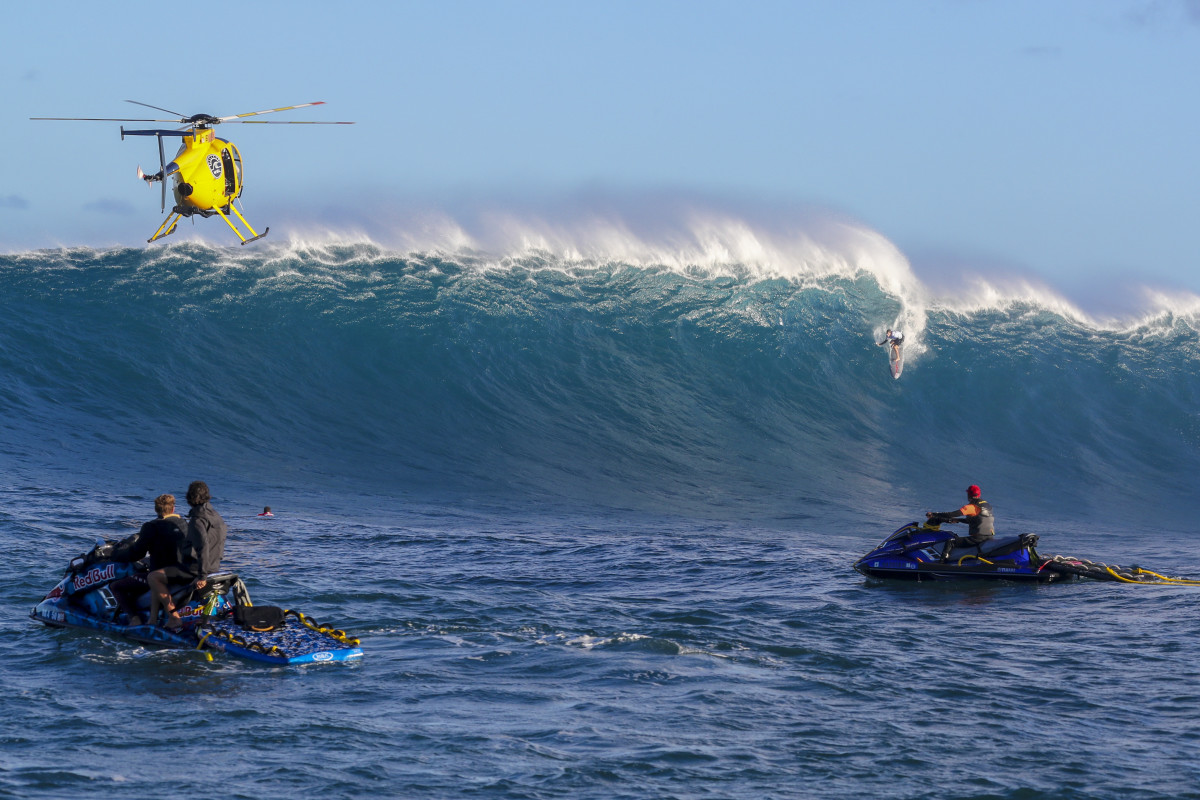
- Jason Lock
- •
- surfer.com
- •
- November 8, 2025
For centuries, Hawaii has been the spiritual home of surfing. On these volcanic islands, surfing isn't just a sport—it's embedded in the culture. That's likely because some of the greatest waves in the world are on offer here, with a range of diverse set-ups to boot. There is a reason Hawaii is known as surfing's ultimate proving ground.
One of the elements that makes Hawaii an ideal place for surfing is its position in the Pacific Ocean. The islands are open to south swells originating from the southern hemisphere from May to October; this brings ideal waves to the islands' south coast spots. The islands are also open to north swells originating from the north from November to February, which bring ideal surf conditions to the islands' north coast zones. It is the northern storms that help set off Hawaii's crown jewel, Pipeline—one of the most technical, beautiful and heavy waves on the planet.
There are only a few other places in the world that can hold a candle to the set-ups of Hawaii—Indonesia and the Maldives are two of the few. But there's a special feeling in Hawaii, one of deep, grounded connection to surf culture and history. There's also the added bonus that the water maintains a steady year-round temperature of 75-80°F. With that said, here are some of the best surf spots across the Aloha State.
Related: 7 of the World's Most Dangerous Waves (You Might Want To Keep Your Distance)
Pipeline
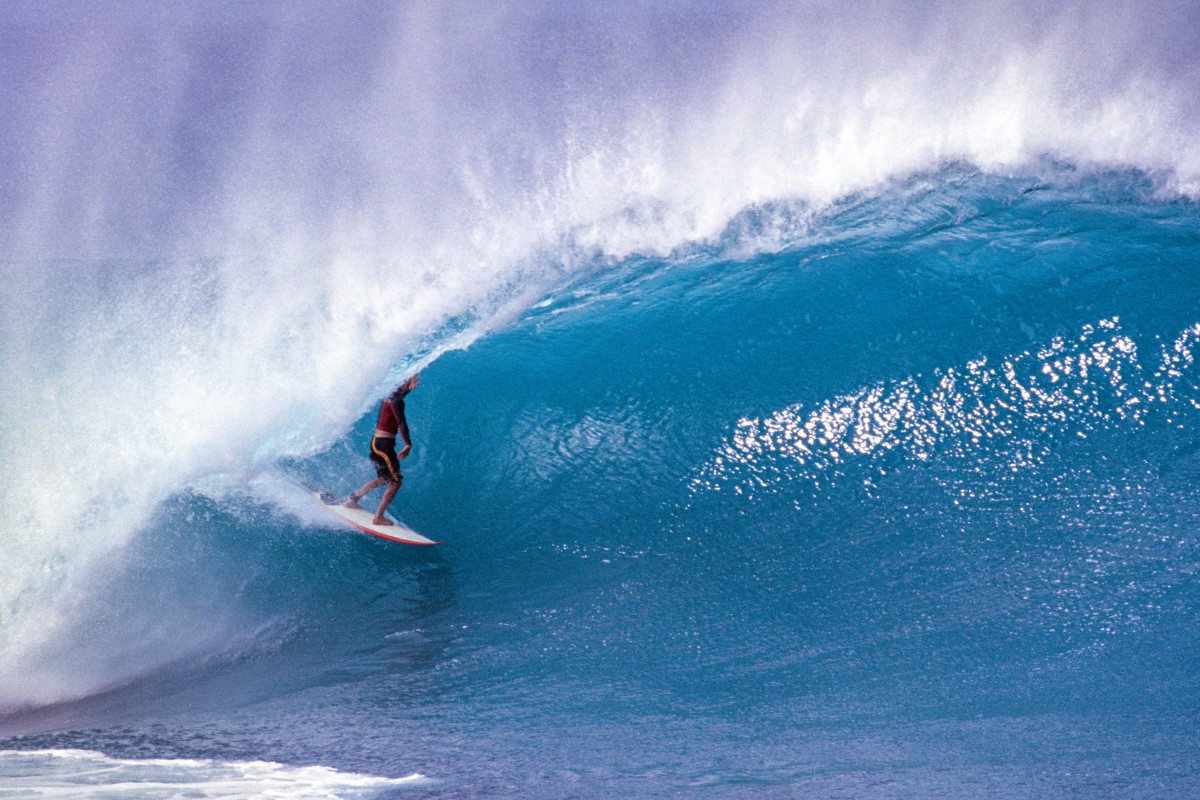
The stuff of legends, Pipeline is one of the most iconic waves in the world. It breaks over a razor-sharp, shallow lava reef that is angled such that it creates an almost-flawless barrel. When swell meets this reef, it jacks up and pitches into that picture-perfect barrel. This tube is a wildly technical ride, especially at size, with the world's best tube riders constantly making minute adjustments just to make it out. During big winter storms, Pipeline can be highly consistent—with both a left and a right on offer, the right known as Backdoor.
A single peak can that can create both a world-class left and right at the same time is rare in the surf world. Pipeline may be the ultimate surfing experience, but it is suited only to the most experienced surfers out there.
Sunset Beach
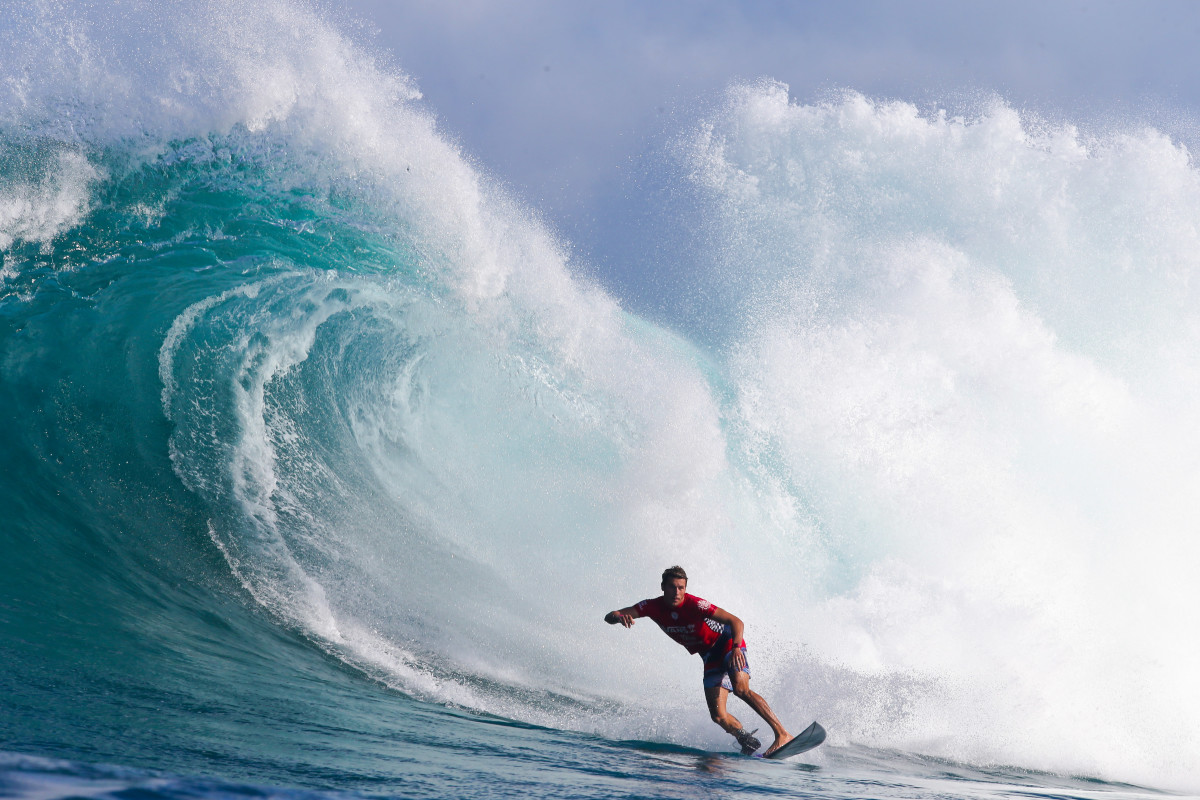
About two miles away from Pipeline is Sunset Beach, a surf spot that can handle bigger swells along the North Shore of Oahu. When Pipeline maxes out, Sunset can hold 20-to-30-foot waves (Hawaiian scale).
Sunset is a bit of a big wave proving ground, but it can be notoriously unpredictable with multiple peaks, take-off zones and strong currents. It's not as perfect as Pipeline, but mastering Sunset takes a robust amount of ocean knowledge—earning itself a place in surfing's hall of surf royalty.
Sunset also has an inside bowl section. If you want to make it out relatively unscathed, you've got to hit the bowl, make it out and then kick into the channel.
Jaws
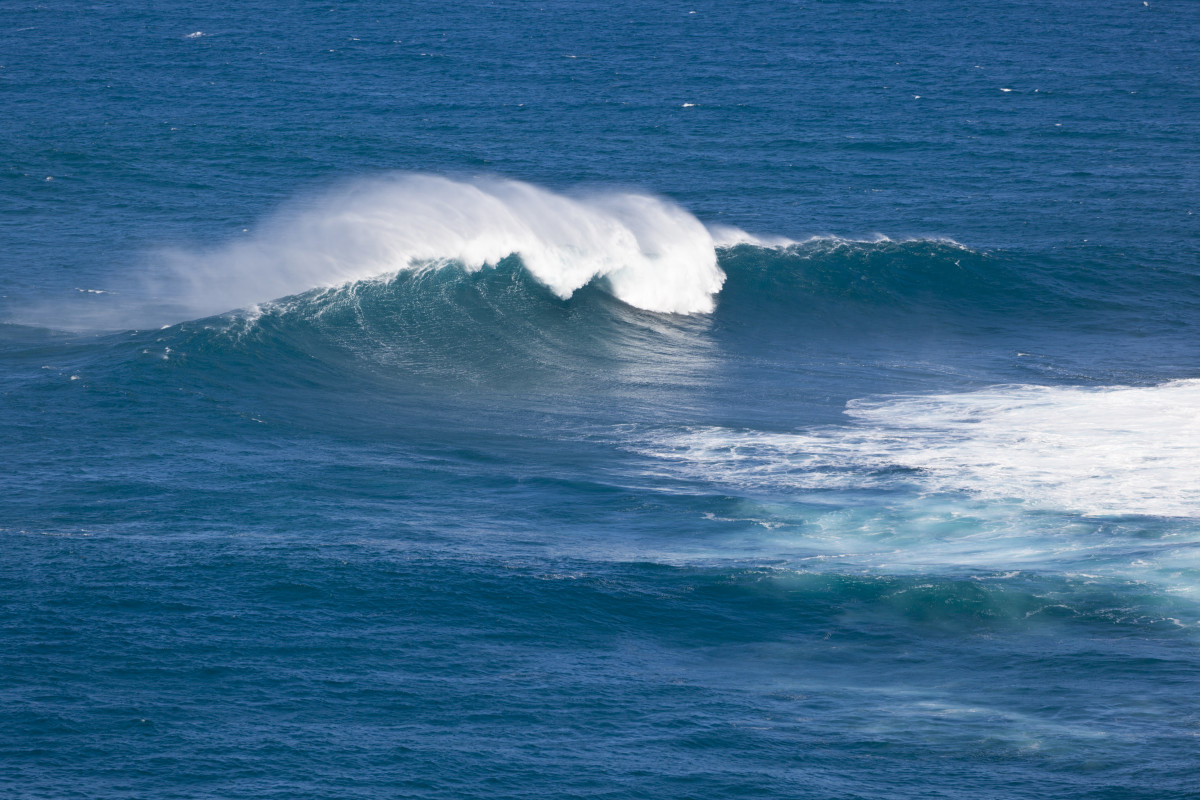
One of the best big waves on the planet, Jaws, or Pe'ahi, is the quintessential big wave barrel. This gigantic mountain of water can stack up to over 80 feet during massive swells and is one of the only surf spots in the world that can handle this size. As a result, it is one of the most powerful waves in the world, and the sheer amount of water moving is mind-boggling.
Jaws also played a significant role in the advent of tow-in surfing. Back in the 1990s, Laird Hamilton and Buzzy Kerbox, amongst others, pioneered the pursuit, using jet-skis to get whipped into massive waves—which, before the strapped movement, were considered impossible to ride. Due to its sheer size, a wipeout at Jaws can put you in serious trouble. This is a life-threatening scenario and should be treated with the respect it deserves.
Waimea
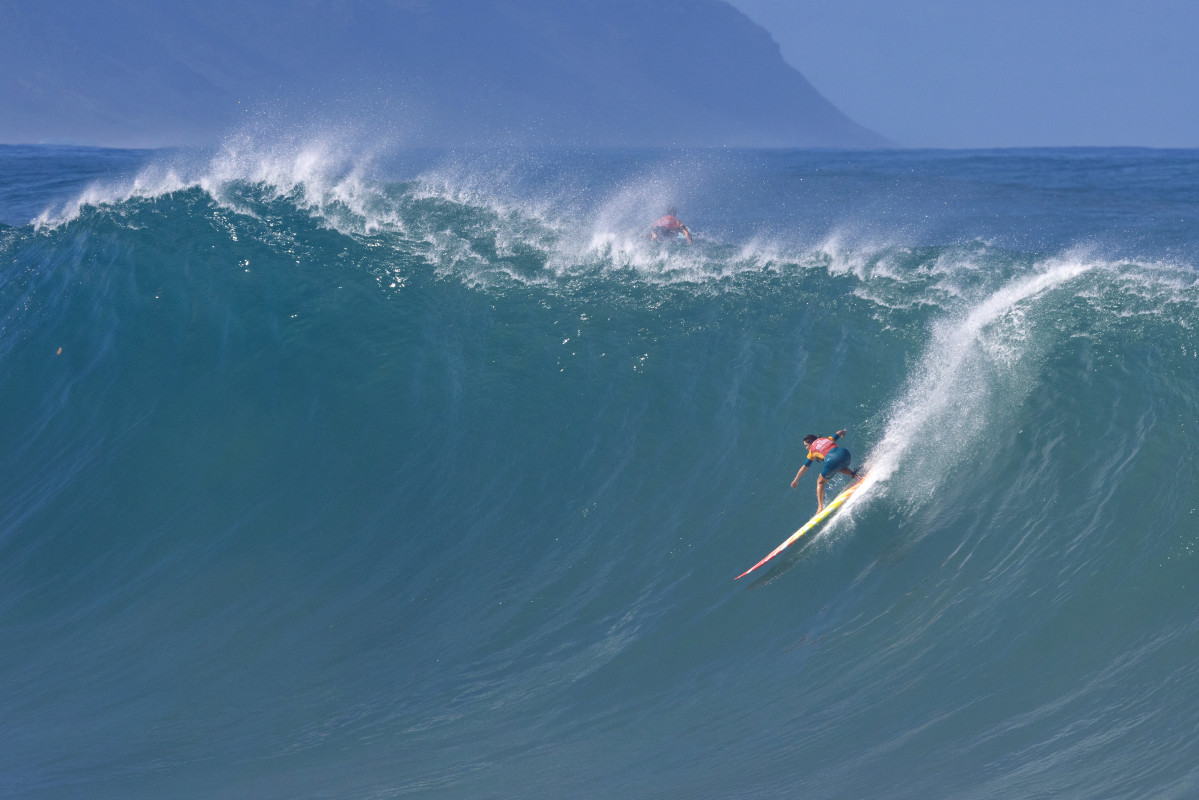
If Jaws represents the pinnacle of progressive big wave surfing, Waimea is the historically significant surf spot that paved the way to get there. In 1957, a group of surfers, including Greg Noll, Pat Curren and Mickey Muñoz, were the first to successfully surf Waimea during a huge swell, proving that waves of that size could be ridden. Waimea holds a special place in the surfing mythos due to this.
It's also home of The Eddie, one of surfing's most prestigious events. It only runs when waves reach 20 feet plus (Hawaiian scale), which means it's happened only 11 times since 1984.
Waimea produces massive, steep, powerful waves that break over a deep-water bay. The takeoff is almost beyond vertical; you're essentially dropping down a moving wall of water. Waves regularly reach 40 feet and above on the biggest days. It is typically a paddle spot as opposed to Jaws' tow-in crew. Waimea is also known for its pretty heavy cleanup sets, where giant waves break across the entire bay, catching surfers inside. Watch for that shorebreak too—it's one of the most dangerous on the planet.
Related: The Life & Times of Hawaii's Most Notorious Surf Family: The Rothmans
Waikiki
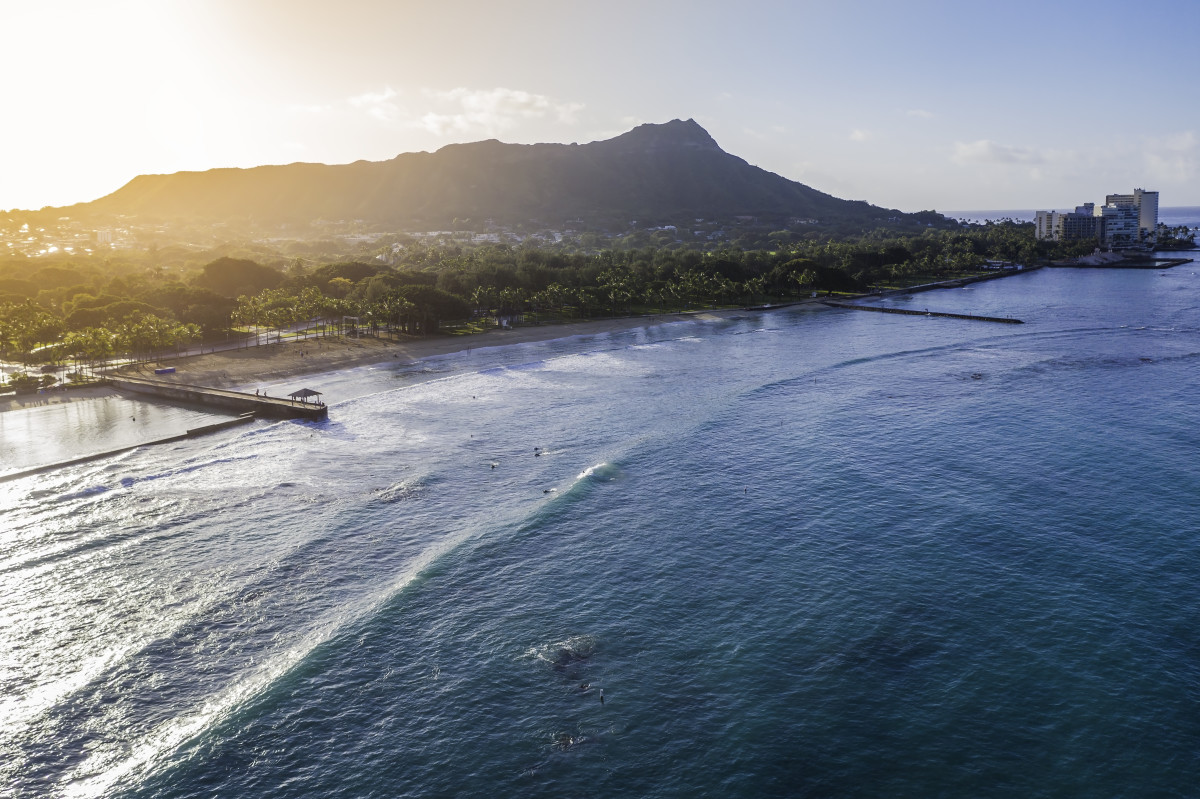
The complete opposite of the North Shore heaviness, Waikiki is home to more mellow waves. Spots like Canoes and Queens can offer up rides of around 100 plus meters.
Waikiki actually has several distinct breaks (Canoes, Queens, Populars, Publics) catering to different skill levels and styles. You can progress from beginner spots to intermediate waves without leaving the area.
Like the previous waves on this list, Waikiki holds a special place in surfing history: this is where Duke Kahanamoku learned to surf and later introduced surfing to the world. It's the birthplace of modern surf tourism. The setting is stunning, too. You're surfing with Diamond Head in the background and the Honolulu skyline behind you. Waikiki proves that a good surf spot doesn't have to be massive or super extreme; sometimes it's about accessibility and fun factor.
Related: How to Surf (and Survive) the Las Vegas Vibes of Waikiki
Ala Moana Bowls
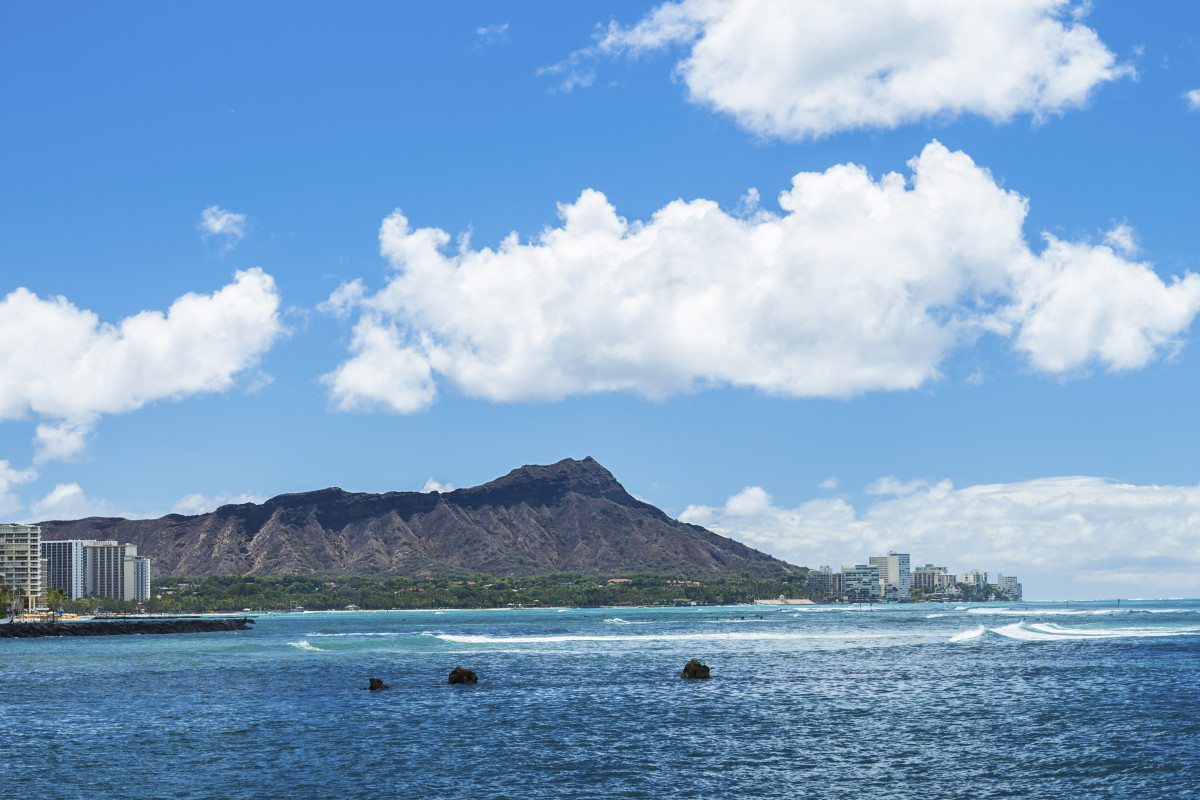
Located just west of Waikiki is Ala Moana Bowls, a reefbreak that creates hollower waves than Waikiki's more chilled vibe. Bowls really fires up during those summer south swells, often handling size better than other South Shore spots, ranging up to about the double-overhead range, while still being pretty fun and extremely rippable. The wave has a defined peak that creates a bowl-like section, offering a nice steep drop followed by an open face for critical turns. It's a spot loved by shortboarders and intermediate-to-advanced surfers, who may be looking to improve in powerful waves. Good surfers just rip the bag out of it.
Honolua Bay
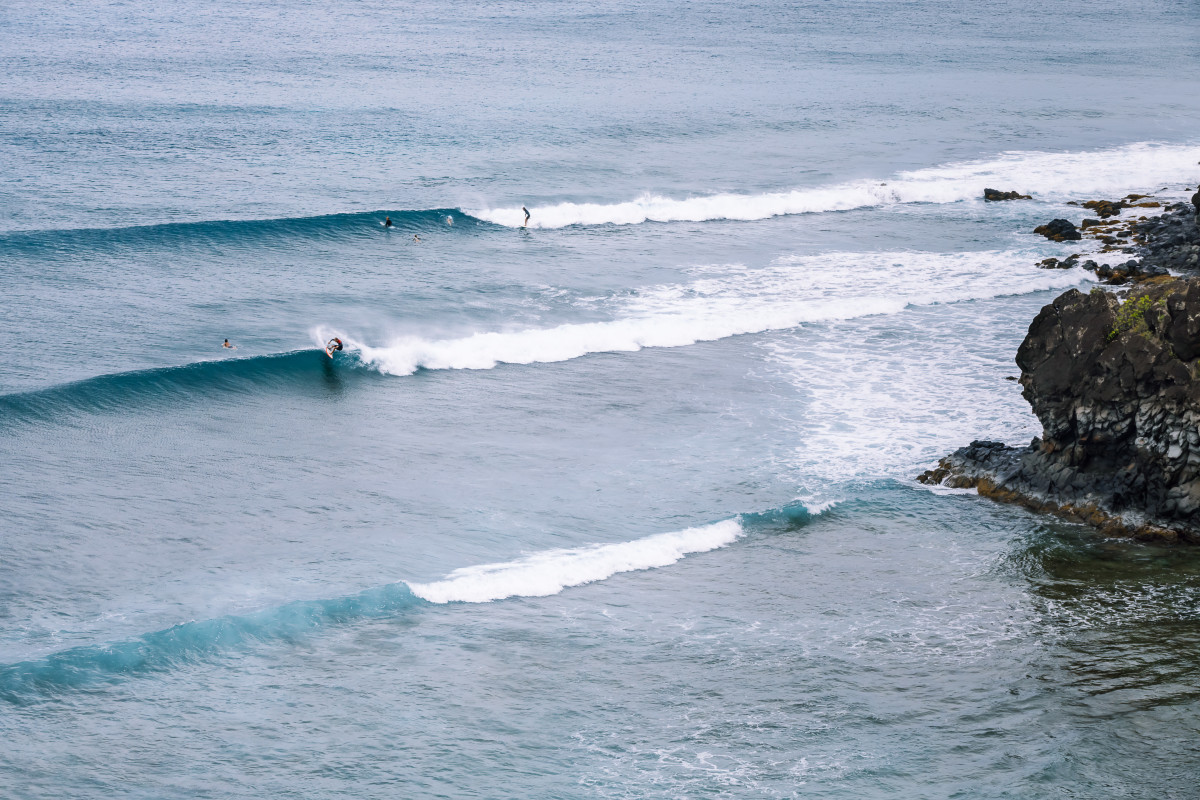
Located on Maui's northwest corner, Honolua Bay is one of the world's most perfect waves—ranking as probably the best pointbreak anywhere. The wave consistently wraps around the bay and, on a good day, you can surf this Hawaiian marvel for 200 to 300 meters, cruising through multiple sections from the outside reef all the way into the bay.
The wave itself is fast and smooth, allowing for progressive surfing. It has multiple sections; the outside is called Cave, the middle is known as Coconuts and then there's the inside bowl. Each section has its own distinct flavor. It's also a bit less crowded than the North Shore of Oahu, offering long, glassy rides in paradise.